21 Favorite Companion Plants for Roses
Discover 21 of my favorite companion plants for roses to enhance beauty, help deter pests, improve soil health, and extend the blooming season.
I’ve always loved growing roses, but I quickly learned they are even better when paired with the right companion plants. Over the years, I’ve experimented with different flowers, herbs, and ground covers to find the best combinations that not only enhance the beauty of my garden but also help keep pests away, improve soil health, and extend the blooming season.
Choosing the right companion plants can make a difference if you want to grow healthier, more vibrant roses without relying on harsh chemicals. In this guide, I’ll share 21 of the best plants to grow alongside roses and explain why they work so well together.
This post contains affiliate links. If you make a purchase after clicking a link I may make a small commission at no cost to you.
Note: This list of plants is what I have grown with my roses. There are many more choices out there for you to try. Experimentation in your garden will provide you with the best companion plants for your climate and conditions.
Why Use Companion Plants for Roses?
Companion planting with roses offers several key benefits:
- Pest Control – Certain plants will naturally help repel common rose pests such as aphids and Japanese beetles.
- Improved Soil Health – Specific companions enrich the soil with nutrients or improve drainage.
- Attracting Beneficial Insects – Many flowers and herbs encourage pollinators and predatory insects that help control pests.
- Aesthetic Appeal – Complementary plants add contrasting textures and colors to enhance the overall look of the rose garden.
21 Favorite Companion Plants for Roses
1. Lavender (Lavandula spp.)
Lavender repels aphids and beetles while attracting pollinators. Its silvery foliage and purple flowers provide a beautiful contrast to roses, so even when it isn’t blooming, it complements the roses.
Aim for shorter growing or dwarf varieties so they don’t block airflow or the visibility of your beautiful roses.
2. Nepeta (Nepeta spp.)
A low-maintenance perennial, the strong scent deters aphids and Japanese beetles while suppressing weeds. Its soft, mounding habit complements the structure of rose bushes.
Be sure and do not grow the more aggressive catnip that can not only swamp your roses but reseed so much that is takes over and becomes weedy.
I prefer the shorter growing specimens like Cat’s Pajamas, Kitten Around, and Junior Walker with my roses. Junior Walker has been a spectacular blooming machine all summer long in my garden!
Grow Nepeta in Your Garden
3. Shasta Daisies
Shasta daisies make excellent companion plants for roses, adding a bright and cheerful touch to the garden while providing practical benefits. Their sturdy stems and bushy growth help create a natural support system, filling in gaps between rose bushes without competing for resources.
Shasta daisies also attract pollinators like bees and butterflies, which can improve overall garden health. Additionally, their resilience to pests and diseases makes them a low-maintenance choice, while their long-lasting blooms complement the elegance of roses, extending visual interest throughout the growing season.
Another plus is I have found that when daisies are planted in front of my roses the deer tend to leave them alone. I discovered this by accident but tested it again over the next few years and found it very effective.
Now we all know that very hungry deer will eat anything, and nothing is truly deer proof, but planting daisies with my roses has kept them from being eaten.
Grow Dasies with Ease!
4. Alliums (Allium spp.)
Onions, garlic, and ornamental alliums deter aphids and attract beneficials but be warned: gophers love to eat them despite what many garden sites tell you. Perennial or herbaceous alliums bloom later in the season than the bulb-grown alliums.
Be aware that the perennial alliums do spread readily by seed. So if you don’t want them to take over make sure to deadhead them as the blooms begin to fade and before they go to seed!
Some people claim that planting them alongside roses can prevent black spot and mildew, but this is an old wives tale. They only help with fungal issues if you create a solution from their leaves or flowers and spray it directly on the roses. Simply growing them nearby will not prevent black spot, making this belief more of a gardening myth than a proven method.
5. Lamb’s Ear (Stachys byzantine)
Lamb’s ear is a fantastic companion plant for roses, offering both practical and aesthetic benefits. Its soft, silvery foliage provides a beautiful contrast to the vibrant colors of rose blooms, adding texture and visual interest to the garden.
As a drought-tolerant ground cover, lamb’s ear helps retain soil moisture and suppress weeds, reducing competition for nutrients. Additionally, its fuzzy leaves make it unappealing to deer and rabbits, offering some natural protection for nearby roses.
With its low-maintenance nature and ability to thrive in well-drained soil, lamb’s ear is an excellent choice for filling in spaces around rose bushes while enhancing the overall garden design.
I prefer the lower-growing ones like Little Lamb and Silver Carpet.
6. Yarrow (Achillea millefolium)
Yarrow attracts beneficial insects like ladybugs and lacewings, which help control aphids and caterpillars.
Yarrow comes in a loads for colors but be warned, more and more areas are worried about it becoming invasive, even though common Yarrow is a native. I have had no issues with it but then if I find something becoming a bully, I dig it out and dispose of it.
There are dwarf varieties now, and I have had none of those reseed themselves or spread by underground rhizomes.
Grow Yarrow from Seed!
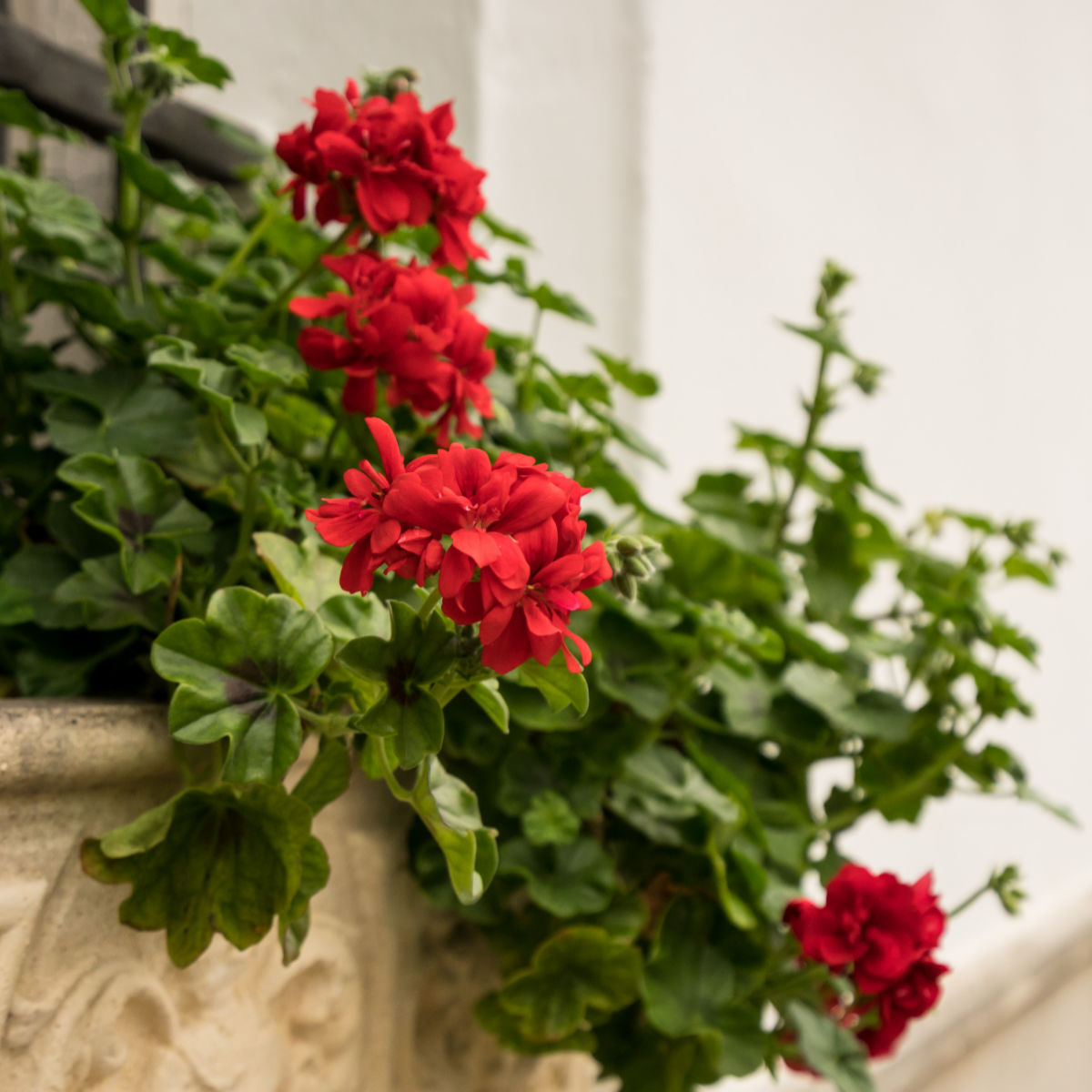
7. Zonal Geraniums (Pelargonium spp.)
Geraniums help control Japanese beetles by acting as a natural trap. The petals of certain geranium varieties, particularly zonal geraniums (Pelargonium spp.), contain compounds that temporarily paralyze Japanese beetles when they feed on the flowers.
After consuming the petals, the beetles become sluggish or immobilized for several hours, making them more vulnerable to predators or easier to remove by hand.
While geraniums do not completely eliminate Japanese beetles, planting them near roses can help reduce beetle populations by disrupting their feeding patterns and making them more susceptible to natural control methods.
Many say to plant them away from the plants you wish to protect instead of among them, but you choose how you want to go about it. If you have a problem and want to plant them with your roses, take a bucket of soapy water when you walk the garden each day and dump the comatose beetles into it.
Grow Geraniums from Seed!
8. Foxglove (Digitalis spp.)
Foxgloves benefit roses in several ways, making them a valuable companion plant in the garden. Their tall, spiky blooms provide shade and wind protection for roses, helping to create a more sheltered microclimate.
Foxgloves also attract beneficial pollinators like bees and hummingbirds, which can improve the overall health and vitality of the garden. Additionally, their deep roots help with tough soil, improving drainage and aeration—conditions that roses thrive in.
Some gardeners also believe that foxgloves release natural compounds into the soil that can promote the growth and resilience of nearby plants, though this is more anecdotal than scientifically proven. Regardless, their striking presence and ability to enhance biodiversity make foxgloves a wonderful companion for roses. Plus they are so simple to grow.
They are done blooming early in the season yet easy to pull out or cut back to neaten things up.
Growing Foxgloves without Fear
9. Salvias (Salvia spp.)
Salvias are an excellent companion plant for roses, offering a diverse selection of species that provide both ornamental beauty and practical benefits. These hardy, drought-tolerant plants belong to the Salvia genus, which includes hundreds of varieties, ranging from compact, low-growing ground covers to tall, showy perennials.
Their long-lasting, tubular flowers bloom in shades of blue, purple, pink, red, and white, creating a striking contrast to the romantic, rounded blooms of roses. Salvias attract a wide range of pollinators, including bees, butterflies, and hummingbirds, which help enhance biodiversity and support a healthy garden ecosystem.
Some varieties, such as woodland sages (Salvia nemorosa), are known for their upright growth habit and spiky flower clusters, making them ideal for adding vertical interest. Others, like mealycup sage (Salvia farinacea), provide continuous blooms from spring through fall, extending color in the garden long after roses have finished their main flush.
Additionally, aromatic salvias such as Salvia officinalis (common sage) and Salvia elegans (pineapple sage) help deter common rose pests, including aphids and Japanese beetles, while contributing fragrant foliage that adds another sensory element to the garden.
With their low-maintenance nature, resistance to deer and rabbits, and adaptability to various growing conditions, salvias make a fantastic choice for complementing and protecting roses in any garden setting.
The tough part is narrowing down which ones you want to add. In my garden the woodland sage is an early bloomer with sporadic bloom after deadheading but still beautiful and stays shorter. The pineapple sage can grow on the larger side, but the scent is amazing and delightful. Plus, the scent is also reputed to repel mosquitoes. I will test it this next season and let you know how well that works.
Discover the Wide World of Salvias
10. Clematis (Clematis spp.)
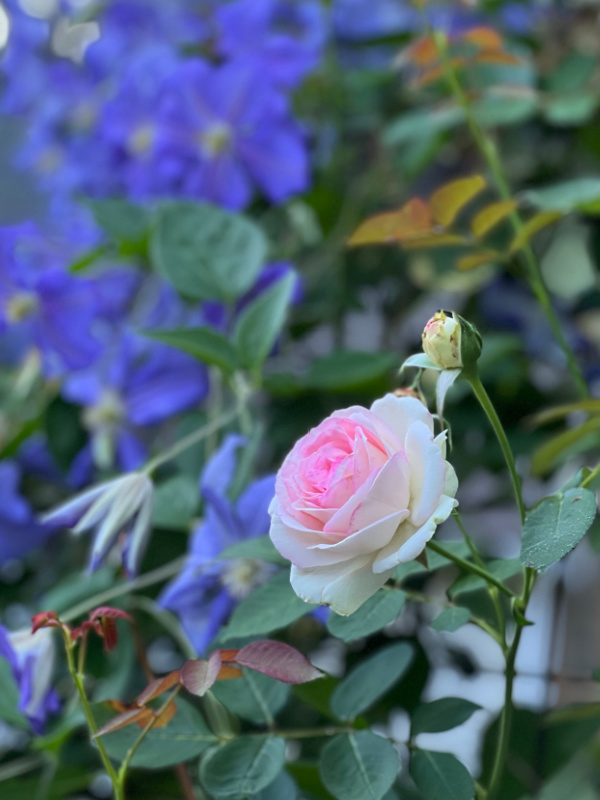
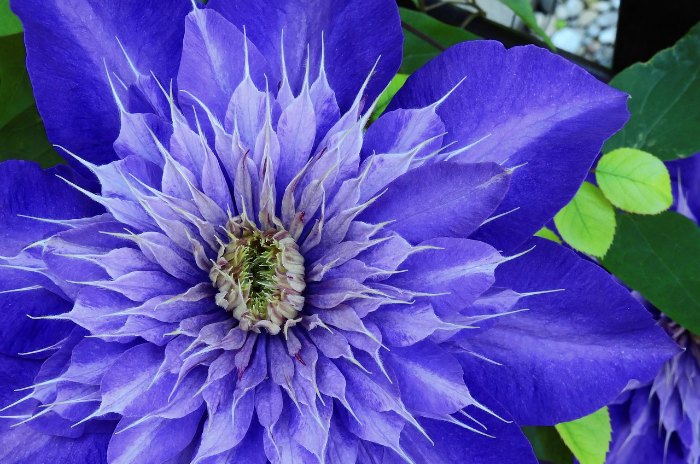
A classic pairing, clematis can climb trellises near roses, offering vertical color and extending the blooming season. I love growing clematis and climbing roses together on an arbor or obelisk!
11. Petunias
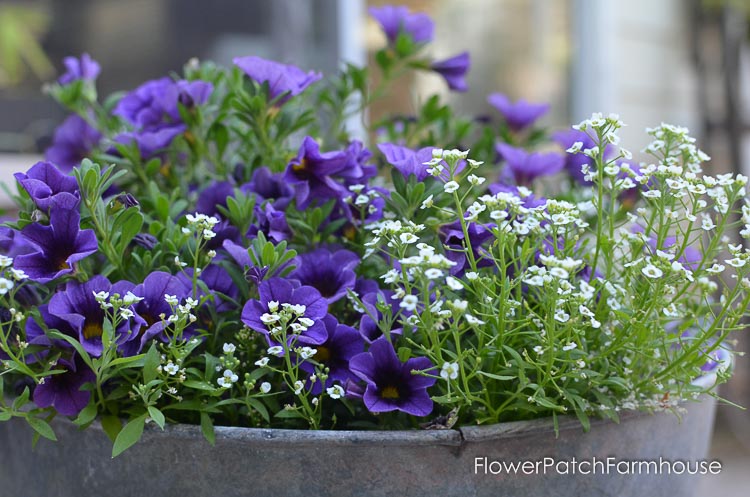
Petunias make excellent companion plants for roses, offering both aesthetic appeal and practical benefits. Their colorful, trumpet-shaped flowers bloom continuously throughout the growing season, providing a vibrant contrast to the classic elegance of roses.
Petunias’ spreading growth habit works as a natural ground cover, suppressing weeds and helping to retain soil moisture around rose bushes. Available in a wide range of colors, from soft pastels to bold, vibrant hues, petunias can be easily matched to complement different rose varieties.
Their adaptability to containers, borders, and garden beds makes them a versatile choice for enhancing the beauty and health of a rose garden. With minimal care requirements and continuous blooms, petunias are a valuable addition to any rose planting.
Petunias can easily be grown from seed in a super budget-friendly way to fill a garden bed or use as a ground cover with roses. They are shallow rooted so they will not compete for resources.
Grow Petunias from Seed
12. Veronica
Veronicas, also known as speedwell, make excellent companion plants for roses due to their elegant, spiky flower spikes and low-maintenance nature. Their vertical growth adds height and texture, beautifully complementing the rounded form of rose blooms.
Veronicas attract pollinators such as bees and butterflies, enhancing the garden’s biodiversity while supporting rose health. Additionally, their resistance to pests and diseases makes them a reliable choice for filling in garden spaces without competing with roses for nutrients.
With a long bloom time from late spring to fall, veronicas help extend seasonal color and create a layered garden design.
13. Alyssum (Lobularia maritima)
Alyssum acts as a living mulch, retaining soil moisture and suppressing weeds. It also attracts beneficial insects. Loads of them! Its sweet scent is a delight to enjoy along the pathway or border as you walk through the rose garden. Plus it is super easy to grow from seed, making it a budget-friendly, low-growing border plant!
14. Nasturtiums (Tropaeolum majus)
Nasturtiums attract aphids away from roses, serving as a sacrificial plant. Their trailing growth adds visual interest to the garden.
Though saying sacrificial plant is a bit dramatic, it really is tough and can handle an aphid attack easily. Nasturtiums prefer to flower in poorer soil; if you find it doesn’t bloom well amongst your roses, it is most likely because it is too enriched.
Nasturtiums are easy to grow from seed and some find them a bit aggressive and coming up in areas they didn’t plant them.
15. Phlox (Phlox paniculata & Phlox subulata)
Phlox provides an extended bloom season and attracts pollinators, complementing roses beautifully.
Garden or tall phlox come in annual and perennial varieties. Some will spread aggressively by underground rhizomes so do your research before planting.
I have different perennial phlox in my garden, and while some are well behaved the white David phlox are quite the garden bully. I now grow them in large pots to keep them in control and place the pots in the garden to fill in bare spots during the season.
Planting Bare Root Phlox in Pots
16. Bee Balm (Monarda didyma)
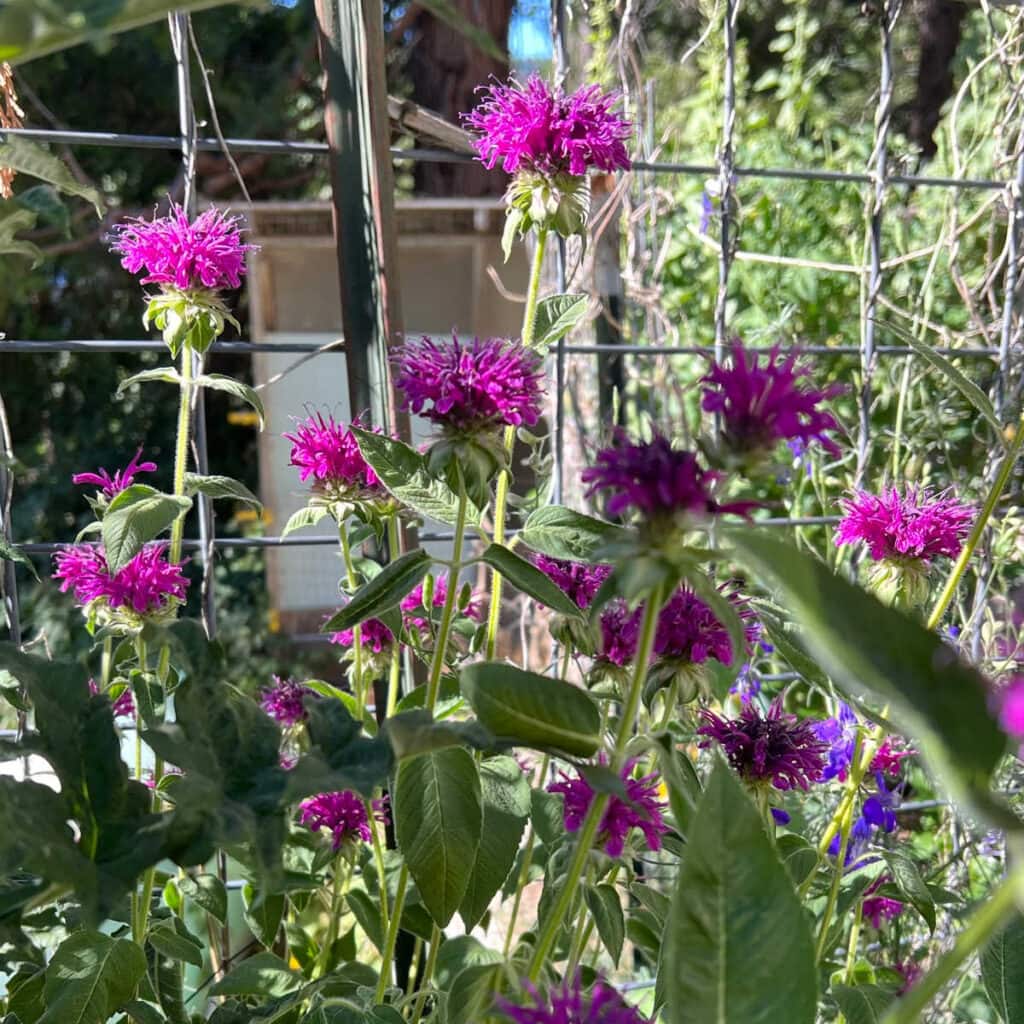
There are annual and perennial types of Bee Balm. Bee balm attracts bees, butterflies, and hummingbirds while helping to deter deer and other foraging animals with its strong fragrance. Many types are susceptible to powdery mildew so if you live in a humid climate search for the mildew resistant hybrids.
Bee balm can also spread aggressively by underground rhizomes but is easily pulled up. Hybrid varieties are more tame and may grow shorter.
I have Purple Rooster, Jacob Cline and Pardon My Purple. Purple Rooster and Jacob Cline can get a touch of mildew but I just cut them back and let them rebloom as needed. It isn’t severe enough to worry about.
17. Hardy Geraniums aka Cranesbill
Hardy geraniums, also known as cranesbills, are excellent companion plants for roses, offering both beauty and practical benefits. Their mounding habit and delicate, five-petaled flowers create a soft, natural look that complements the bold blooms of roses.
Shorter growing hardy geraniums act as a living mulch, helping to suppress weeds and retain soil moisture, which benefits the health of nearby rose bushes. They also attract pollinators and beneficial insects while being naturally resistant to pests and diseases. With their long bloom time, easy care, and adaptability to various garden conditions, hardy geraniums are a reliable and charming addition to any rose garden.
Growing Hardy Geraniums in Your Garden
18. Thyme (Thymus spp.)
There is culinary thyme but here I am talking about the ground cover forms. This drought-tolerant ground cover, thyme repels pests and improves soil structure.
Some ground cover thymes can be used to cook with but most are are not best suited for that purpose.
Low-Growing Ground Cover Thymes:
- Creeping Thyme (Thymus serpyllum) – A fast-spreading variety with tiny leaves and pink or purple flowers, great for filling gaps between stepping stones.
- Elfin Thyme (Thymus serpyllum ‘Elfin’) – A very low-growing, dense variety with tiny leaves and purple flowers, perfect for small spaces.
- Mother of Thyme (Thymus praecox) – A mat-forming thyme with fragrant foliage and purple or pink flowers, often used as a lawn alternative.
- Red Creeping Thyme (Thymus serpyllum ‘Coccineus’) – Features vibrant red or magenta flowers in summer, adding a bold pop of color.
- White Creeping Thyme (Thymus serpyllum ‘Albus’) – A low-growing variety with white flowers, offering a softer look in the garden.
- Woolly Thyme (Thymus pseudolanuginosus) – Known for its fuzzy, gray-green foliage and soft texture, though it flowers less frequently.
- Lime Thyme (Thymus x citriodorus ‘Lime’) – A low-growing variety with bright lime-green foliage and a citrusy scent, great for adding color contrast.
- Turbo Thyme (Thymus praecox ‘Turbo’) – A vigorous, fast-spreading variety with deep green foliage and abundant pinkish-purple flowers, ideal for filling in gaps quickly.
19. Creeping Chamomile (Matricaria chamomilla & Chamaemelum nobile)
Creeping chamomile (Chamaemelum nobile), also known as Roman chamomile, is a low-growing, aromatic ground cover that thrives in sunny garden spaces. Its feathery, fern-like foliage releases a pleasant apple-like fragrance when stepped on, making it an excellent choice for pathways, borders, and companion planting with roses.
This hardy perennial suppresses weeds, retains soil moisture, and attracts beneficial insects such as bees and hoverflies, which help pollinate nearby plants. While it produces small, daisy-like flowers in summer, some gardeners prefer the non-flowering variety (Chamaemelum nobile ‘Treneague’) for a dense, carpet-like effect.
Drought-tolerant and easy to maintain, creeping chamomile adds beauty, fragrance, and functionality to any garden. I grow it in my garden but it prefers part shade in the hottest part of summer. It works well as an underplant as the rose leaves can provide the shade needed.
20. Feverfew (Tanacetum parthenium)
Feverfew (Tanacetum parthenium) is a hardy, daisy-like perennial known for its bright white flowers and feathery, aromatic foliage. Traditionally grown for its medicinal properties, feverfew also serves as a beneficial companion plant in the garden.
It helps deter pests such as aphids and spider mites, making it a great natural protector for roses and other delicate plants. Feverfew attracts pollinators and beneficial insects, contributing to a healthier garden ecosystem.
Easy to grow in full sun and well-drained soil, it self-seeds readily, providing a continuous display of cheerful blooms throughout the growing season. Some consider the self seeding pesky but I like it and it is very easily pulled up if if pops up where you don’t want it.
Cut it back hard in May to keep it on the shorter side, it can become 3 feet tall, obscuring the view of your roses. Or you can let it bloom and cut back after for another bloom spell, and this second flush of blooms will be shorter.
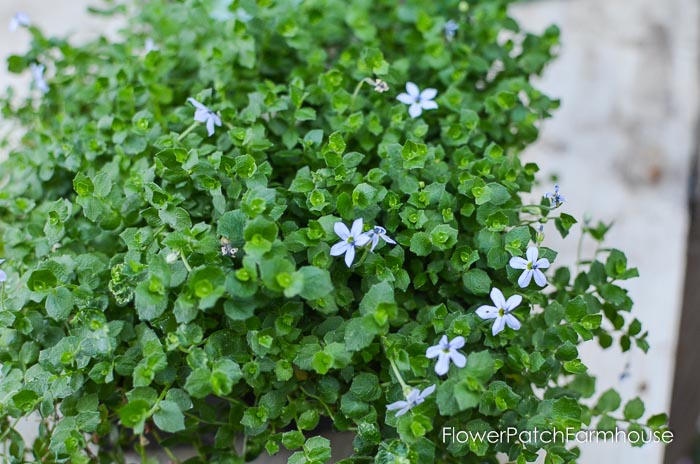
21. Blue Star Creeper (Isotoma fluviatilis)
This delicate ground cover suppresses weeds and retains soil moisture while producing small blue flowers that create a soft, natural look around roses. There is a white version as well that is just as pleasing. Both stay very flat to the ground and do prefer a bit of shade from the hot sun. Under planting taller plants that will shade it is recommended.
How to Plant and Maintain Rose Companions
Spacing and Layout
- Ensure companion plants do not overcrowd roses to allow for good airflow and help prevent fungal diseases.
- Place taller companions, such as foxgloves and salvias, behind rose bushes. Unless you are planting an island bed that you walk all around. Placing foxgloves in the center is recommended in that case.
- Use low-growing plants like thyme and alyssum as ground covers or border edges.
Soil and Watering Needs
- Choose companions that thrive in similar conditions to roses, such as well-drained, nutrient-rich soil and consistent watering.
- Mulch around plants to help retain moisture and suppress weeds.
Use Ground Covers in Place of Mulch!
Encouraging Pollinators and Pest Control
- Select a variety of flowering companions that bloom at different times to provide a continuous food source for pollinators.
- Regularly check for pests and remove any affected leaves to prevent infestations.
What It Doesn’t Do or Common Myths
Disease Prevention – Let’s just be blunt, there is a LOT of nonsense out on the internet! Some of it is promoted by supposedly reliable sources. I have seen popular garden sites and different extension offices that make false claims about the fungal disease combating properties of some plants.
The research shows that only pulverizing the plants with water, straining then spraying the roses with the solution shows any help with mildew or black spot not the planting of those specimens with roses.
Another myth is that certain plants improve air circulation and reduce fungal diseases. Does that make sense to you? That is just another nonsense statement that proliferates on the internet. The only way you can increase air circulation is proper spacing of plants and add a fan to blow on your plants (which is not practical but hey, if they can write nonsense, why can’t I?)
Final Thoughts
Pairing roses with the right companion plants enhances both the beauty and health of a garden while reducing the need for chemical fertilizers and pesticides. Whether you choose fragrant herbs, pollinator-friendly flowers, or lush ground covers, these companions will help your roses thrive throughout the growing season.
Do you have a favorite companion plant for your roses? Share your experience, I love getting new ideas from others!
Happy Rose Gardening!
Hi, I’m Pamela
With 45 years of hands-on gardening experience, I love sharing practical tips, proven techniques, and inspiration drawn from my own gardens. My goal is to nurture your confidence, spark your passion, and help make every step of your gardening journey more enjoyable.


Absolutely loved this guide, Pamela! Your insights on pairing roses with companions like lavender and Nepeta are both practical and inspiring. Can’t wait to try some of these combinations in my garden!