Will the New GMO Purple Tomato Cross-Pollinate With Other Tomatoes?
If you’ve heard chatter about a new GMO purple tomato and wondered whether it could cross-pollinate with the tomatoes already growing in your garden, you’re not alone. This question has been popping up more and more — and understandably so.
Let’s slow things down, take the fear out of it, and talk about what actually happens in real gardens.
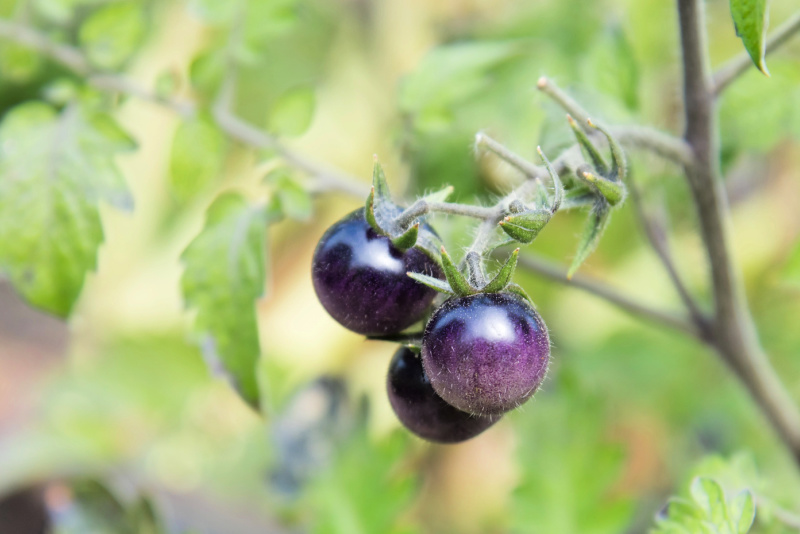
What is the new purple GMO tomato?
Yes — there is now a genetically engineered purple tomato approved for home gardeners in the U.S.
This tomato was developed by Norfolk Plant Sciences and modified to produce anthocyanins, the same antioxidants found in blueberries and purple grapes. These compounds are responsible for the tomato’s deep purple color — and they’re linked to potential health benefits.
The genes come from snapdragon flowers, allowing the tomato flesh (not just the skin) to turn purple, which makes this tomato quite different from traditionally bred purple or dark-skinned varieties.
NOTE: Snapdragons are safe to eat and do not cause any health concerns. This is completely different than genetically modified plants created to resist herbicides.
I’ve grown this tomato in my own garden, and while the flavor didn’t impress me, I appreciated how easy it was to grow. I’ll be trying it again in a different part of the garden, since soil and growing conditions can sometimes make a surprising difference in flavor.
Can GMO purple tomatoes cross-pollinate with other tomatoes?
Technically, yes. Practically, it’s very unlikely.
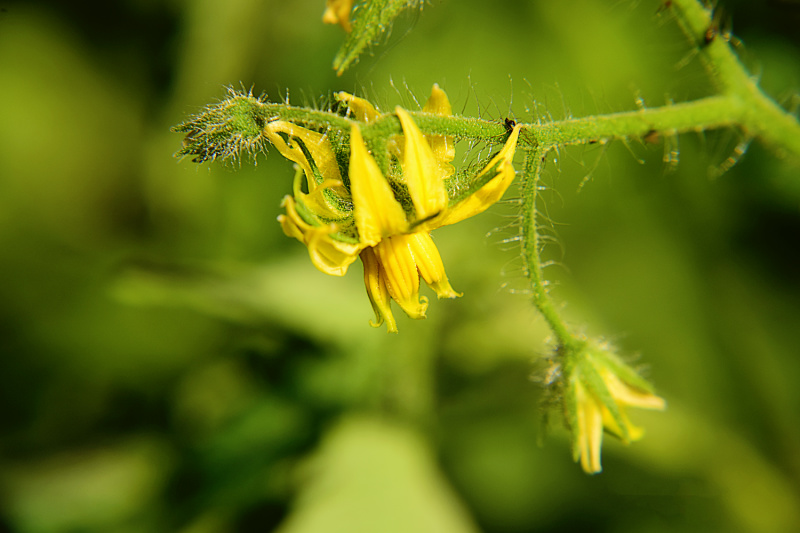
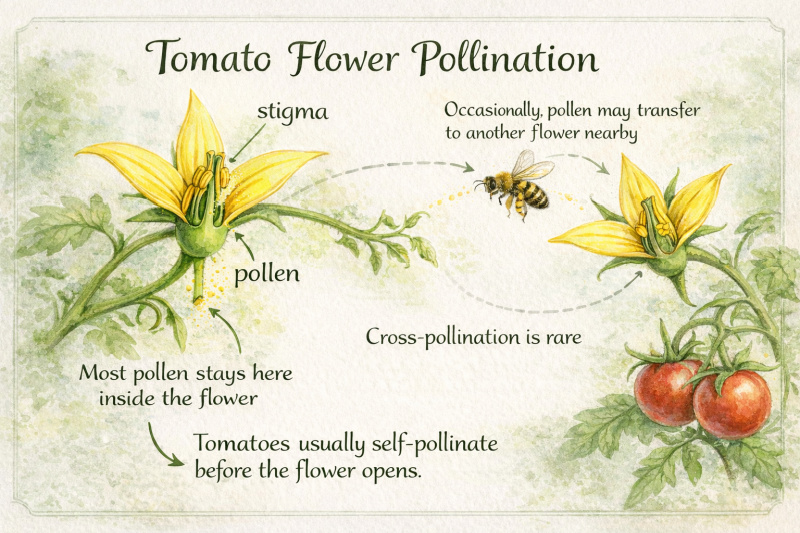
Tomatoes — GMO or not — are primarily self-pollinating plants.
Here’s why cross-pollination is rare:
- Tomato flowers usually fertilize themselves before the flower even opens
- The pollen is tightly enclosed inside the flower
- Insects and wind play a very minor role
In most home gardens, natural cross-pollination rates are well under 5%, and often much lower.
The fact that a tomato is genetically modified does not change how tomato flowers pollinate.
What happens if cross-pollination does occur?
This is where many concerns come from — and where reassurance is needed.
If pollen from a purple GMO tomato fertilized another tomato flower:
- Only the seeds inside that one tomato would be affected
- The tomato you harvest and eat this season is unchanged
- Nothing spreads to:
- nearby plants
- the soil
- other fruits on the same plant
There is no way for the tomatoes around it to suddenly “turn GMO.”
The only time cross-pollination shows up is if you save seeds and plant them the following year.
Is this a problem for home gardeners?
For the vast majority of gardeners: no, it’s a non-issue.
You do not need to worry if you:
- are growing tomatoes close together
- are eating the fruit
- are not saving seeds
This is no different from growing hybrids next to open-pollinated tomatoes — something gardeners have done for decades.
When does it actually matter?
The only time cross-pollination matters is if:
- you save tomato seeds
- and you want a variety to remain true to type
In that case, occasional cross-pollination — GMO or not — can create mixed genetics in saved seed.
Simple precautions (only if you save seed)
Most gardeners don’t need to do anything special. But if seed purity matters to you:
- Save seeds from tomatoes grown a few feet apart
- Grow different varieties with foliage or plants between them
- Bag a few blossoms before they open if you want to be extra precise
No special measures are required just because a tomato is genetically engineered.
The calm, practical takeaway
- Yes, the purple tomato is a real GMO
- Tomatoes are still mostly self-pollinating
- Cross-pollination is rare
- Only saved seeds could be affected
- There is no spread, contamination, or garden takeover
In real gardens, this is a quiet, manageable issue, not a crisis. As with so many gardening worries, the reality is far gentler than the headlines.
If you’re curious about trying the purple tomato yourself, or simply want to grow what you love without worry, you can do so with confidence.
Happy gardening,
Pamela 🌿
Hi, I’m Pamela
With 45 years of hands-on gardening experience, I love sharing practical tips, proven techniques, and inspiration drawn from my own gardens. My goal is to nurture your confidence, spark your passion, and help make every step of your gardening journey more enjoyable.



Thanks! I mostly grow flowers but tomatoes are also one of my veggies. I am not sure whether I will get a reply on this but I’ll ask anyway.
I have pansies, echinacea and delphinium growing in the basement as seedlings now but is it too early to put them in the unheated greenhouse