Why USDA Zones Don’t Matter When Winter Sowing
Lately, gardeners are trained to treat USDA hardiness zones like a gardening rulebook—especially when it comes to starting seeds. But winter sowing flips those rules upside down. In fact, your USDA zone has almost nothing to do with whether winter sowing will work for you. This simple seed-starting method succeeds everywhere from Alaska to Florida, because it relies on natural processes—not zone-specific timing.
Here’s why USDA zones don’t matter when winter sowing and why you can confidently winter sow no matter where you live.
This post contains affiliate links. If you make a purchase after clicking a link I may make a small commission at no cost to you.
USDA Zones Measure Only One Thing
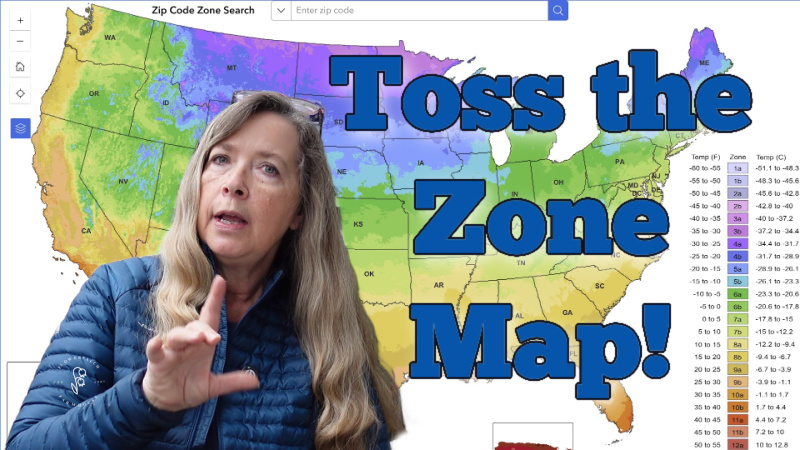
The USDA Plant Hardiness Zone Map is based strictly on average annual minimum winter temperatures.
It does not measure:
- The length of your winter
- Freeze/thaw cycles
- Snow cover
- Humidity
- Spring warm-up patterns
- Day length
- Average highs
- Soil temperature patterns
Winter sowing depends on these other environmental factors—not your coldest winter temperature. So while zones are helpful for choosing perennials, they don’t determine whether seeds can germinate using the winter sowing method.
Winter Sowing Works With Temperature Fluctuations—Not Against Them
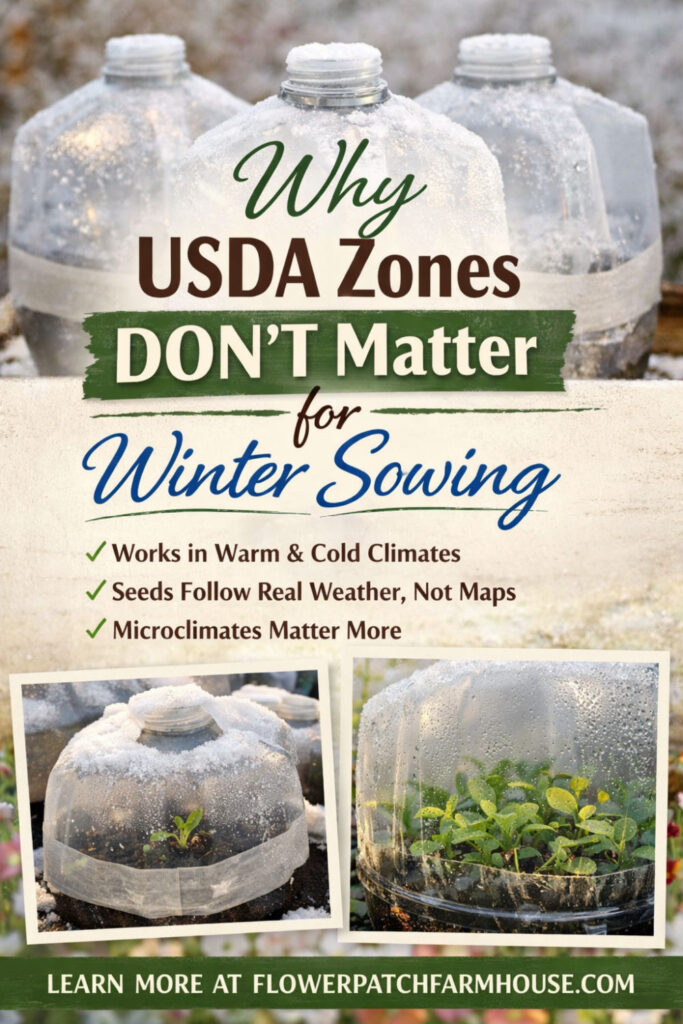
Winter sowing containers create a mini greenhouse that responds to natural temperature changes. Seeds stay dormant until the weather tells them it’s time. This means:
- A gardener in Zone 3 may see earlier germination than someone in Zone 8 if warm spells arrive sooner.
- A Zone 9 gardener can winter sow because cooler winter nights still provide the chill period many seeds require.
Winter sowing isn’t tied to the label of a zone—it’s tied to local weather behavior.
What the USDA Zones Actually Tell You
Seeds Are Programmed by Nature, Not USDA Calculations
Most hardy annuals, perennials, and many vegetables have adapted to sprout at exactly the right environmental trigger. These triggers include:
- Gradual soil warming
- Longer daylight hours
- Consistent overnight temperatures above freezing
Your zone number doesn’t provide any of this information. Seeds germinate based on conditions, not “Zone 8B” or “Zone 5A.”
This is why the same plant species naturally reseeds in vastly different climates—it adapts to the local seasonal rhythm, not to a map designation.
Winter Sowing for Beginners!
Natural Moisture Patterns Do the Work for You
Winter sowing relies heavily on natural precipitation entering your containers through the top opening and ventilation slits. Rain, snow, freezing rain, fog, and regular humidity shifts keep seeds evenly moist. This moisture-driven dormancy and germination cycle happens everywhere except truly tropical locations.
It doesn’t matter if your zone experiences snow all winter or only rain—the cycle of moisture + cold + gradual warming is enough to trigger germination.
Cold Stratification Needs Are Met Automatically
Many flowers and perennials require cold stratification—a period of repeated freezing and thawing paired with moisture. Winter sowing is one of the most reliable ways to meet this requirement because containers naturally mimic what seeds experience outdoors.
Cold stratification depends on:
- Exposure to cold
- Time spent damp
- Length of chilling
None of these are determined by a USDA zone number. They are determined by weather duration, something each gardener experiences uniquely—even within the same zone.
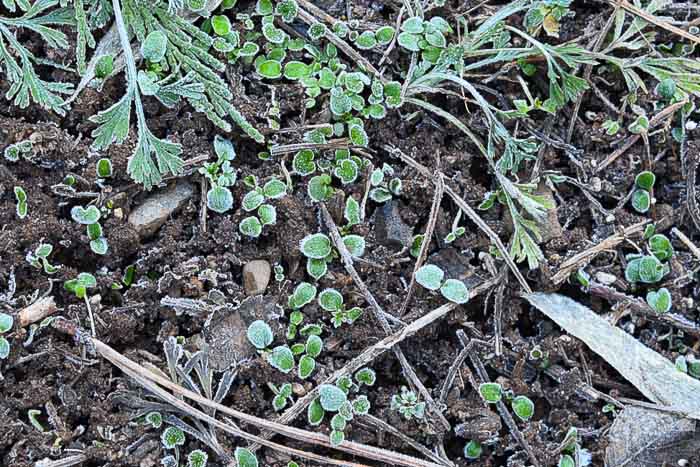
Local Microclimates Matter More Than Zones
Two gardeners in the exact same USDA zone can have completely different winter conditions. Consider:
- One may live on a south-facing slope with early warm-ups.
- Another may garden in a valley that stays cold weeks longer.
- Urban gardeners experience heat reflection and warmer soil.
- Rural gardeners may have deeper freezes but more consistent snow cover.
Microclimates affect winter sowing germination far more than a zone label ever could.
Winter Sowing Adapts to Early Springs and Late Winters
Traditional seed-starting schedules tie gardeners to predicted frost dates. Winter sowing ignores frost calendars completely.
The containers protect seedlings through:
- Unexpected cold snaps
- Late frost events
- Sudden warm spells
- Repeat freeze–thaw cycles
Because winter sowing adapts to the real-time weather, your zone’s estimated frost date becomes irrelevant.
Best Winter Sowing Containers!
The Method Works in Both Hot and Cold Regions
Winter sowing is successful in climates that barely dip below freezing and in climates where winter holds on for months.
In warm zones:
- You still get nighttime drops into the 30s or 40s.
- Containers and location in the garden moderate daytime heat so seeds don’t sprout too early.
- Cool-season annuals thrive in your mild winters.
In cold zones:
- Snow insulates containers.
- Temperature swings create perfect stratification.
- Seeds stay dormant until daylight length increases.
The method self-adjusts—there’s no need to “zone-adjust” anything.
Seeds Naturally Germinate When the Time Is Right
Because winter sowing relies on nature’s timing signals, you don’t schedule anything. Seeds germinate when:
- Light levels increase
- Soil inside containers reaches ideal temperatures
- The environment becomes stable enough to support growth
This natural timing is universal across climates and unaffected by a gardener’s zone number.
What Actually Matters for Winter Sowing
Since zones don’t matter, what does? Only a few factors:
- Choose seeds that can tolerate cold (perennials, hardy annuals, cool-season vegetables).
- Use proper containers with drainage and ventilation.
- Set them outside and let nature handle everything else.
Your zone isn’t part of that equation.
Final Thoughts
USDA zones are useful for choosing plants that can survive your winter temperatures—nothing more. Winter sowing works outside that framework because it depends on natural seasonal cues, not a map. Whether your winter is mild, wet, snowy, dry, long, or short, winter sowing adapts beautifully.
When you trust nature’s timing, your USDA zone simply doesn’t matter.
Happy Winter Sowing!
Hi, I’m Pamela
With 45 years of hands-on gardening experience, I love sharing practical tips, proven techniques, and inspiration drawn from my own gardens. My goal is to nurture your confidence, spark your passion, and help make every step of your gardening journey more enjoyable.