How to Care for Christmas Cactus: Easy for Beginners
Easy Christmas Cactus Care tips to grow happy, healthy plants.
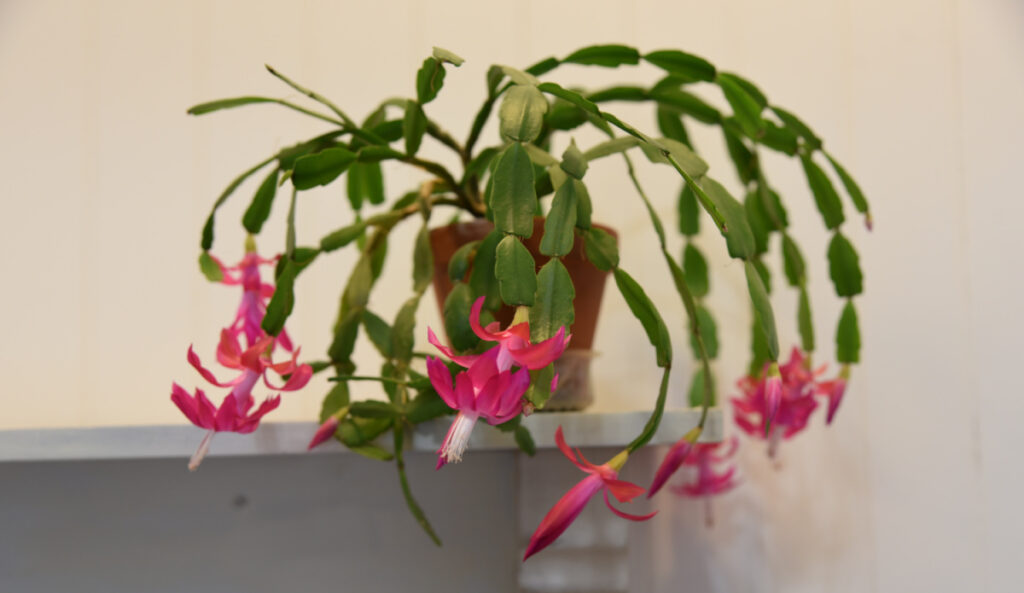
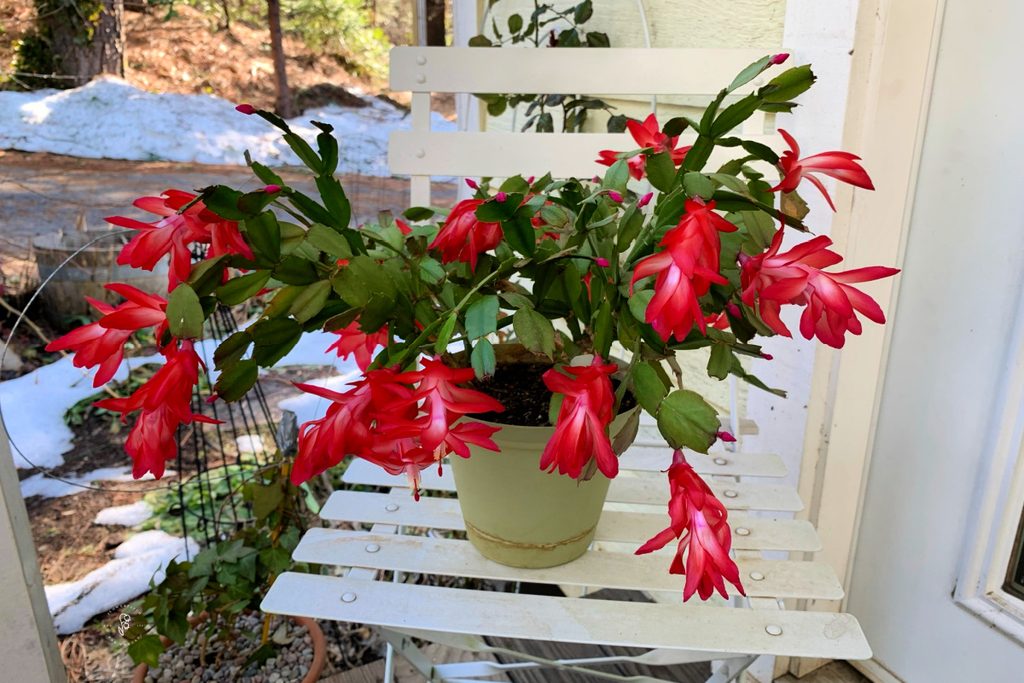
Christmas cactus care is easier than you might think! With the right light, watering, and a few simple adjustments throughout the year, these beautiful plants can reward you with gorgeous winter blooms for decades.
I grow both Christmas cactus and Thanksgiving cactus, and I’ve found that they are among the easiest houseplants to keep happy. Mine spend part of the summer outdoors in a sheltered spot before coming inside when the weather turns cold.
Despite their name, these aren’t desert cacti. They are tropical plants that appreciate bright, indirect light, well-draining soil, and regular watering without staying soggy.
In this guide, I’ll share what has worked for me, including how to water, fertilize, encourage blooms, propagate new plants, and solve some common Christmas cactus problems.
Not sure whether you have a Christmas cactus or Thanksgiving cactus? They’re often mislabeled in garden centers. Learn how to tell the difference in my easy identification guide.
I have the Thanksgiving (schlumbergera truncata) and Christmas Cactus (schlumbergera x buckleyi) plants. Another name for them is Zygo cactus, both are treated the same. I have yet to try the Easter Cactus.
You will often see Thanksgiving Cactus sold as Christmas Cactus during the winter holiday season.
Christmas Cactus Care at a Glance
| Care requirement | What works best |
|---|---|
| Light | Bright, indirect sunlight |
| Water | Water when the top inch of soil feels dry; I prefer to use a moisture meter. |
| Soil | Loose, well-draining potting mix |
| Temperature | Generally 60–75°F indoors |
| Humidity | Moderate to higher humidity |
| Fertilizer | Diluted balanced fertilizer during active growth |
| Blooming | Cooler nights and sufficiently long periods of darkness |
| Pruning | After flowering or during active growth |
| Repotting | Only when needed, usually every few years |
| Propagation | Stem cuttings with 2–4 segments |
| Pet safety | Generally considered non-toxic to cats and dogs |
That is in the Northern Hemisphere; in Brazil, their native territory, these are called May Flowers since they bloom in May there.
This post contains affiliate links. If you purchase after clicking a link I may make a small commission at no added cost to you.
How to care for Christmas Cactus – Zygocactus –
Today you will learn..
- Best soil for Christmas cactus
- How to Water
- Christmas Cactus fertilizer tips
- How much sun or light do they need
- Best humidity levels
- How to encourage your Christmas Cactus to bloom
- Pruning Christmas cactus
- Repotting
Christmas Cactus Soil
The best thing for any plant whether indoors or out is the proper soil.
Traditionally most recommend planting your Christmas cactus in rich yet free-draining soil, such as a succulent, cactus mix or African violet mix. Make sure to use a pot with drainage holes.
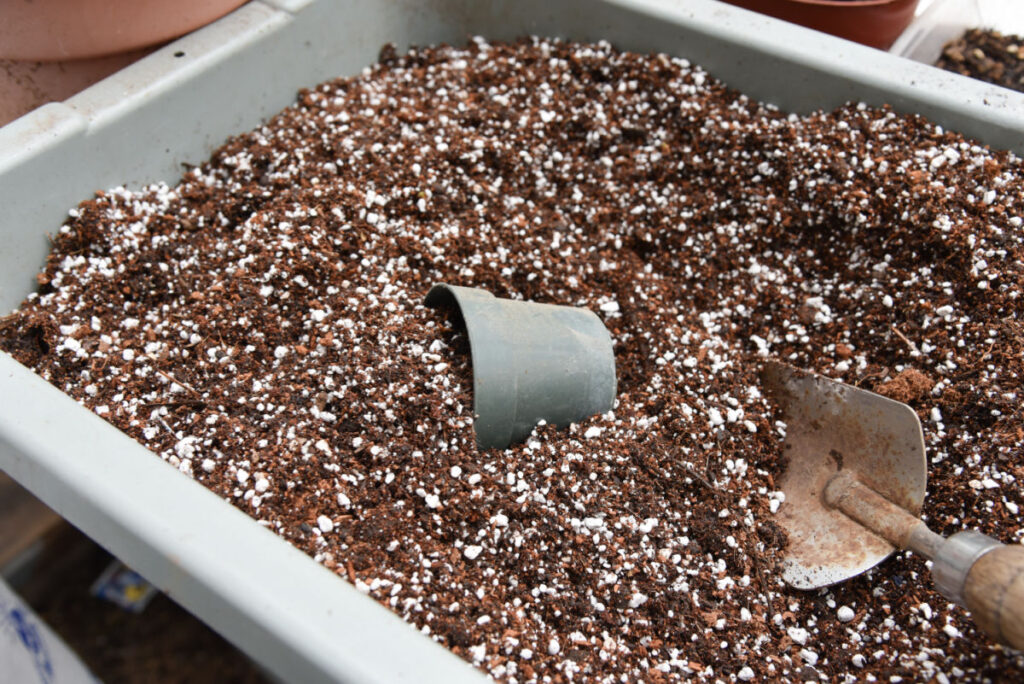
Typically, I use regular-quality potting soil or my DIY Potting soil and add 1/3 builders’ sand or horticultural sand to it for a well-draining mix. Sometimes I use straight good-quality potting soil. I have found they work fine, and you get more for your money.
Terra Cotta pots have lots of benefits as planters and I tell you why in this post.
Christmas Cactus Watering
Water thoroughly and regularly, letting the top inch of soil dry out between watering.
The ones I have in Terra Cotta pots are easy to spot when they need water; you can see where the soil is damp on the outside of the pot.
When kept outside during the summer, they needed water more often, just like other potted plants. For best performance, it is important not to underwater these plants or let them sit in water.
For me, watering my indoor Christmas cactus every other week has worked well, but if it is outdoors and especially hot, then I water once a week.
If you want to be more precise, I have found using this Moisture Meter very helpful in avoiding root rot, which can occur with excess water.
Christmas Cactus Fertilizer
When do you feed your Christmas cactus?
The so-called experts tell you to stop feeding in late summer and then begin again after they start to put on new growth in late winter.
Personally, I feed year-round every other week with a balanced fertilizer. I do make it a bit weaker in winter as I do all my house plants. So you choose what you prefer to do.
You can use a well-balanced organic plant food like this one.
Zygocactus are not the same as desert cacti; they are tropical and do not take the same care. Most cactus fertilizers are geared toward desert cacti.
How Much Sunlight Does a Christmas Cactus Need?
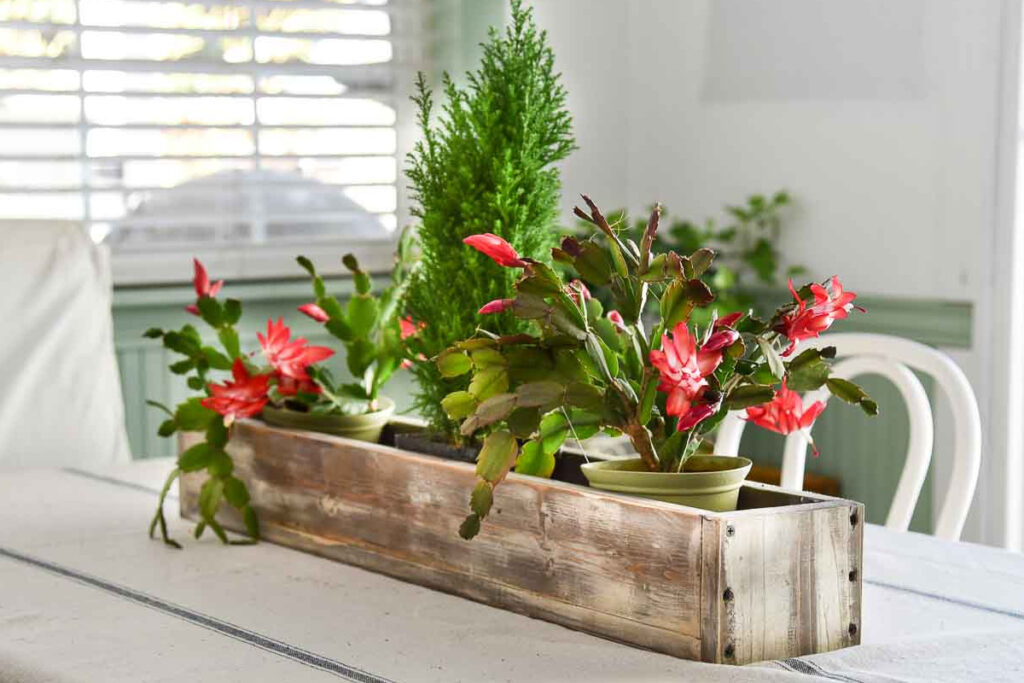
To get your holiday cactus to grow and flourish, you need to place it in a bright place that gets indirect sunlight. Mine have done well in an east-facing window.
Direct sun can burn the leaf segments of the plant; it will turn red if it gets too much heat or sun.
If you do not have a good bright spot for your Christmas cactus, you may wish to try grow lights. These can be especially helpful if you live in a region that gets less than 8 hours of daylight in the winter months.
Though grown as indoor plants, I have found that they love being outside during the summer.
Put them in a shady yet bright location. Mine are on my side-covered porch, and I kept some in my greenhouse during the summer months.
I have also noted that the Christmas – Thanksgiving cactus plants I have in windows that get bright light will bloom much more prolifically as opposed to a north-facing window.
Big temperature changes can cause the cactus blossoms to drop before they open. They bloom longest in cooler temperatures. The optimal temperature for Christmas cacti is 60-70 degrees F.
Provide Humidity
The Christmas and Thanksgiving cacti love high humidity. These epiphytes are tropical plants, not desert plants, and they thrive in humid conditions.
Some say to mist your plants, but that does not do much. If your environment is dry, that will last about 2 seconds.
Place your Christmas cactus pot on stones with water beneath to create humid a environment if you live in a dry environment or if you heat or cool your house with HVAC.
This method has been disputed as providing enough humidity, but so far it has helped in my home.
I use these window sill plant trays. There are bottoms on my pots so I just fill the trays with water and set my potted Christmas cactus in them.
I have seen a dramatic improvement in my plants since doing this. Or I recycle jar lids to lift the pot out of the water.
This year I have added this humidifier in my office, where I keep many of my houseplants, and I can see a difference in their health.
Encourage Christmas Cactus to Bloom
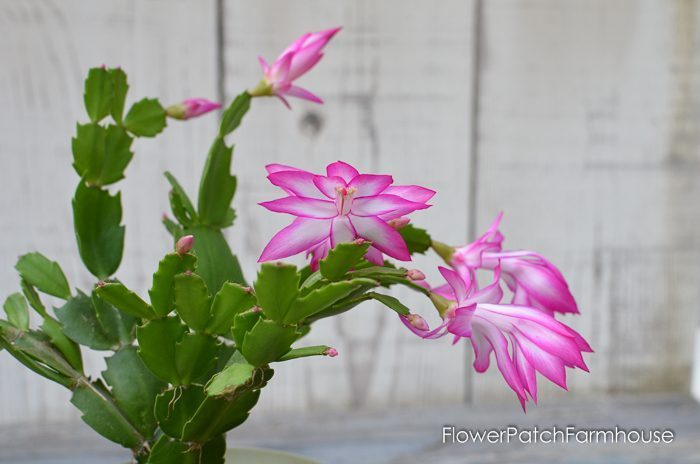
Christmas cactus flowers better when slightly pot-bound or crowded and don’t usually need repotting. (Once every three years at the very most.)
get consistent results!
Get These Plants to Bloom Reliably Every Year!
I share my best tips and tricks to get massive amounts of blooms each year. I don’t follow the typical advice!
Hop on over and see what works best for me plus it is just easier.
If you do re-pot your cactus, the best time is when it’s not blooming.
I shared how I get consistent blooms from my Christmas and Thanksgiving Cactus here, but if you want to go about it differently, you can try what many others say works.
About Oct. 1 set your Christmas cactus in a room where you never turn the lights on at night.
For the flower buds to set, Christmas cacti need 12 – 14 hours of continuous darkness per day.
After the flower buds have set, the plants can withstand light at night. Cool night temperatures also encourage bloom, 50 to 55 degrees.
Some cover their plant with a paper bag each evening and remove it in the morning to give it the darkness it needs.
Those techniques are much to fussy for me, I am a lazy gardener and need quick and easy.
Just remember, it also should have cooler temps to set a good amount of buds.
Cold drafts and sudden temperature swings can cause the flower buds to drop. Keep the plants away from doors and vents for the best success in preventing that from happening.
Pruning Christmas Cactus
I have an entire post dedicated to the pruning of these plants. This is a good time to make new plants.
Please visit there to get a step-by-step guide and free video on the best way to prune Christmas Cactus.
Repotting Christmas Cactus
Unless your zygocactus is struggling, repotting is optional. Many people don’t bother repotting their plants.
I know people who have 30, 40, and 50-year-old plants that are huge and have never repotted them.
But if yours needs re-potting, be sure and use the correct potting soil as mentioned earlier in this post.
Pot up into a slightly larger pot, don’t go big! Christmas cacti like to be somewhat root-bound to bloom well.
Repot anytime if you see your plant is in distress and you don’t know how else to fix it.
If you have a choice, make sure to not interrupt next season’s blooms. That means you should try to re-pot not long after it has finished blooming.
When, depends on the plant, whether a Thanksgiving or Christmas cactus.
There is no hard and fast rule. It is almost March for me right now and I plan on potting up a cactus that seems to be struggling and I don’t know why.
I have ruled out Fungus Gnats and Spider mites so who knows.
I may have used contaminated potting soil when I potted it up last Summer. See all about the latest and greatest contamination that you may encounter one day.
Propagate Christmas Cactus from Cuttings
I have an entire blog post and video on that subject:
Propagate Christmas Cacti from Cuttings
Video: Easiest Way to Propagate Christmas and Thanksgiving Cactus Cuttings
Common questions about Zygocactus – Christmas Cactus
How often do you water Christmas cacti?
As needed and that is different for everyone. The best way to gauge is to use a Moisture Meter. Let your plant dry out between waterings and avoid too much water.
When your cacti need water, give it enough to run through the pot. Let the plant absorb the water that runs through into the tray for half an hour, then drain off any excess.
Do Christmas cacti need a lot of sunlight?
Zygocactus do like bright indirect light but not direct hot sun. Direct sunlight will cause leaf scald and burn the foliage.
You will know that they are getting too much sun if they start to turn red or develop tan blotches on the leaves.
I have some in a window that gets just a little bit of direct sun in the winter when it is weaker; you will see in my video at the end of this post.
How do I keep my Christmas cactus blooming?
You will read many methods, but first, you need to know that true Christmas cactus typically bloom just one time, though it can spread over several weeks.
The Thanksgiving aka November, cactus can bloom numerous times from late Fall on into Summer if given the right conditions. See the section above on how to encourage Christmas Cactus to bloom.
Do you water a Christmas cactus from the top or bottom?
You can choose either. But just be sure not to let the plant sit in the water for more than half an hour.
How many times a year does a Christmas cactus bloom?
See the answer to How to keep Christmas Cactus blooming.
Do Christmas cactus like bathrooms?
Zygocactus love humidity, so keeping them in a bathroom is great if that location also meets their other needs.
Happy Gardening!
Hi, I’m Pamela
With 45 years of hands-on gardening experience, I love sharing practical tips, proven techniques, and inspiration drawn from my own gardens. My goal is to nurture your confidence, spark your passion, and help make every step of your gardening journey more enjoyable.




great info thank you
I’ve always sent my plants to Summer Camp for the warm months…bring them in at the first hint of freezing temps…water it and put it someplace w some sun…and voila la…buds…lve just gotten a supermarket orchid thru summer…I have new growth…first one I haven’t killed…
I water them as much as they need without overdoing it. Since mine are in the house it is the same year round. How often can depend on your home temperatures and humidity levels. I don’t have a total dark period as some do so I don’t really know about that.
I purchased a white Christmas Cactus, last December. And, knew nothing about taking care of this plant, all the buds fell off. With your information I am hoping I know what to do now, but have one question. Should the plant be watered during the total dark period?
I am just now starting a plant of my own off of my grandmother’s plant, the original plant is over 100 years old! It has been passed down through a few generations
Thanks so much for the information