Keeping Your House Clean 10 Minutes at a Time
People ask me from time to time how I can spend so much time painting, gardening, and enjoying other creative endeavors while keeping my house relatively clean.
When I first started getting that question, I would merely blink. I hadn’t really thought about it. I did little things every day, and they had become such a routine that I hardly noticed them.
So when I originally wrote this post, I spent two weeks paying attention. I logged what I did and actually set a timer to see how long the different chores took.
What made the biggest difference wasn’t how fast I could dust or mop. It was keeping things picked up and doing a little each day so that, when it was time to clean, I could get right to it.

This post contains affiliate links. If you make a purchase after clicking a link I may make a small commission at no cost to you.
There is a big difference between walking into a bedroom and being able to dust and sweep, and walking into a bedroom where you first have to gather clothes, put away shoes, and find the top of the dresser.
Those little daily habits are what make keeping your house clean 10 minutes at a time possible. They may seem too small to matter, but they save so much work later!
It has been six years since I wrote the original post, and that is the part I want to make especially clear in this update. A little each day goes a long way toward keeping a home cleaner and making housework easier to manage.
The heart of my routine
Keep things picked up, put belongings away as you finish with them, and take care of small messes before they grow. Then give one room or task a little attention at a time. You spend less of your cleaning time clearing a space before you can actually clean it—and have more time to enjoy your home and the things you love.
Keeping Your Home Tidier Makes Cleaning So Much Easier
Let me start with our bedroom, because it is a good example of what I mean.
In our routine, our clothing is hung up, put away, or tossed into the hamper. We aren’t leaving it on the floor, draped over a chair, or hanging from the bed rail.
That one habit means I don’t have a pile of clothing to deal with before I can clean the room. The floor is ready to sweep, and the furniture is ready to dust.
Putting a shirt into the hamper takes only a moment. Dropping it on the floor takes about the same amount of time, but leaves a job waiting for you later. Multiply that by several days and several people, and those little jobs become a whole pickup session before the cleaning even begins.
The same thing happens in the kitchen. If the counter is covered with things that belong elsewhere, wiping it down becomes a project. When things are put away as you finish using them, you can give the counter a quick wipe and move on.
Keeping a room picked up is part of what keeps cleaning from taking over your day.
I am not suggesting you follow everyone around or keep your home looking as though nobody lives there. We live in our homes, cook meals, work on projects, and enjoy our hobbies. Of course things get messy.
But taking a few moments to put things back afterward keeps yesterday’s mess from joining today’s. That is where those small daily efforts really pay off.
How Long Does It Take to Clean?
Our home is on the smaller side, approximately 1,344 square feet, with three bedrooms and two full bathrooms. When I wrote the original routine, one bedroom was used as an office, and another was a guest room that didn’t get much use.
We also have solid-surface floors rather than wall-to-wall carpeting. Those details help explain the times I shared.
I am not rushing through the house. I work at a regular pace and round my times up. Making the bed takes me about one minute and forty-five seconds, for example, so I call it two minutes.
But the reason a general bedroom cleaning could go so quickly is that the room is already picked up. I am not starting with a week’s worth of belongings scattered everywhere.
If you are starting with a lot of clutter or cleaning that has fallen behind, it will take longer. Begin with getting one area tidier, then give it regular attention. You are making future cleaning easier as you go.
And notice that the title says 10 minutes at a time, not 10 minutes a day. There are everyday chores, such as dishes and laundry, in addition to giving individual rooms attention.
Your house may be bigger than mine, and your household may have different needs. Use the idea of small, regular efforts rather than worrying about matching my minutes exactly.
The Little Things I Do Each Day
When I look closely at my routine, I realize how many small jobs are tucked into the day. They don’t feel like a big cleaning session, but they help keep the house from getting away from me.
Getting the Bed Made
Making our bed had become my husband’s job. It hasn’t always been his chore. I asked him to please make the bed before taking his morning shower, and he did. He was quite proud that he could make it better than I could!
When I decided to time my chores for the post, I actually had to ask him to leave it unmade so I could see how long it took me.
That little story is a reminder that sharing the work doesn’t have to begin with a complicated plan. One specific task, done regularly, makes a difference.
Keeping Clothing Put Away
The hamper, closet, and drawers are the places clothing belongs when we are finished with it. Making that a habit saves having to collect it all later.
Here is a photo of my husband’s work shirts folded and “filed” in a drawer. It makes them easy to see without digging through a stack, and we could fit more in the drawer that way.
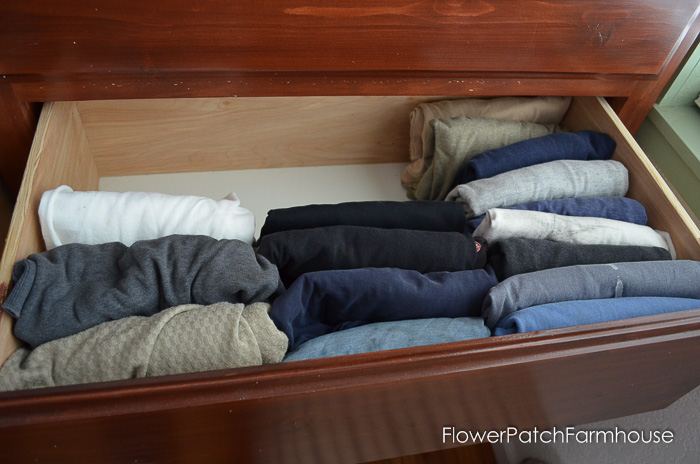
An organized drawer helps keep things tidy because using it doesn’t create another mess. You can find what you need and leave the rest in place.
Taking Care of Dishes Along the Way
We run the dishwasher each night. Yes, we go through enough dishes to warrant running it that often. One of us will unload it as our coffee brews in the morning. The coffee takes about 15 minutes to brew, and unloading the dishwasher takes 4 minutes.
That small job done makes the rest of the day easier. With the dishwasher empty, dishes can go directly into it as we use them instead of collecting in the sink.
It isn’t just about getting one chore done. It is about making the next chore simpler, too.
If you wash dishes by hand, the same idea can help: deal with a manageable batch regularly rather than letting every dish wait until the kitchen feels overwhelming.
Wiping Up After Cooking
I also wipe the counters and around the stovetop after preparing meals. It takes only a few minutes in my small kitchen.
A fresh spill is usually easier to deal with than something that has dried and stuck. A little attention after cooking means I have less scrubbing waiting for me on kitchen-cleaning day.
Use an appropriate cleaner for your surfaces and follow its directions. The habit of taking care of the mess promptly matters more than having a particular bottle under the sink.
I keep things very simple and have a DIY cleaner I use on almost all surfaces. Some like to use vinegar, but neither my husband nor I like the smell, and I have not found it as effective. You can find the recipe here!
Sweeping Where Dirt Comes In
During winter, bringing in wood for our woodstove means bringing in bits of debris, too. Even with feet wiped at the door, there is always something to sweep up.
Since bringing in the wood is usually done by my husband, I ask him to give the short stretch between the door and woodstove a quick sweep each time so that debris isn’t tracked farther through the house. To make this simpler, we keep a broom by the woodstove.
That is another example of a little job saving a bigger one. Instead of waiting for dirt to spread, the area is taken care of in less than a minute where it first collected.
Set a Timer and Work Comfortably
Set the timer for ten minutes, then give your attention to the task you chose.
The timer provides a boundary. It isn’t a challenge to move faster than is comfortable or safe. If five minutes suits your day better, use five.
I find it easier to begin when I know I don’t have to keep going until the entire room is finished.
Stay in the Area You Chose
It’s easy to carry something to another room, notice another mess, and forget what you started. (I am so guilty of this)
Use a small basket for items that belong elsewhere. Set them aside while you finish the immediate task, then return them to their places during your final minutes or in a separate session.
The basket is a temporary helper, though. Empty it regularly so it doesn’t become another pile to sort.
Finish With a Simple Reset
Put supplies away, take out any trash you gathered, and check what remains.
If you didn’t finish, choose a specific next step: “Tomorrow I will vacuum this room” is more useful than “I still have so much cleaning to do.”
Stop when you need to. The progress you’ve made still counts.
Keeping House With Children—and Sharing the Work
I raised four children in the same square footage, so the idea of keeping things picked up didn’t begin with a quiet house and an unused guest room.
When the children were growing up, making their beds before school was part of the routine. Their beds weren’t made perfectly. They were made according to what the children could do, and that was enough to help the rooms look tidier.
At night, we picked up toys and other things from the floor. Dirty clothes went into the hamper, and things that belonged elsewhere were put away.
Those habits took practice and consistency from the time they could walk. Children need to be shown what a task involves, and younger ones may need someone working alongside them. But learning to return belongings to their places makes life easier for the whole household.
The important part was that we didn’t let everything accumulate until I had to spend a large chunk of time picking up before I could clean.
The same applies to adults. Rather than asking generally for someone to “help more,” agree on a specific job and when it will be done. Making the bed, putting away one’s clothes, or taking responsibility for dishes can all help keep the daily work moving.
A tidy home is a shared responsibility. Small contributions from everyone go a long way.
Did you know that saying ‘go clean your room’ can be overwhelming to a child? They don’t know where to focus, but if you say: ‘go pick up your Legos and put them in their tub, then come back and tell me when you are done’: is simpler and can keep them on task. (Don’t be surprised though, if they start to play with them as they pick them up) My point here is to give them specific direction, not a general instruction.
Declutter a Little at a Time, Too
Another thing that makes cleaning easier is having fewer unnecessary things to move, dust, and find places for.
But clutter can feel overwhelming once it has built up. That is why I approach it in small pieces, just as I do cleaning.
I get a box or bag and start adding things for donation. I don’t have to fill it in one big decluttering session. If removing one item is all I can manage that day, I remove one item.
One item is an attainable beginning. Often you end up finding more, but you don’t have to stand in the middle of a room and decide the future of everything you own.
I also tied taking donations away to an existing weekly errand. Our trash went to the dump one day a week, and I use that day to take the donation bag or box to the thrift store.
Giving it a place in the routine helped keep it from riding around in the car for weeks.
The point is to keep things moving. A little sorting today, a little putting away tomorrow, and a regular trip to drop off donations can gradually make a space much easier to care for.
You don’t have to wait for the perfect free weekend to begin.
Give One Area Attention Each Day
Along with the everyday habits, I assign rooms to different days, so I don’t have to tackle the whole house at once.
This is the basic pattern:
| Day | Area of focus |
|---|---|
| Monday | Bedrooms |
| Tuesday | Kitchen |
| Wednesday | Living and dining rooms |
| Thursday | Bathrooms |
| Friday | Office |
The daily habits continue alongside that schedule. Dishes don’t wait until Tuesday, and clothing doesn’t stay on the floor until Monday.
That is what makes the room-by-room cleaning easier. I am giving a space extra attention, rather than dealing with every bit of mess that has accumulated there all week.
In the kitchen, I can clean a refrigerator shelf or give the stovetop more attention. I didn’t have to empty and scrub the entire refrigerator at once.
In the office, I note that dealing with little things as I notice them often leaves very little to do on Friday.
Make a schedule that fits your house and your life. Some rooms will need more frequent cleaning than others. What matters is returning to them regularly and keeping everyday messes from piling up in between.
Why Doing a Little Each Day Helps So Much
A single shirt in the hamper doesn’t look like a big accomplishment. Neither does wiping the counter or unloading the dishwasher.
But imagine the difference after several days of doing those things—or several days of leaving them.
In one case, the bedroom floor is ready to be swept, the counter is ready to use, and the sink has room for the next meal’s dishes. In the other, you have a collection of jobs waiting before you can even begin cleaning.
The small things add up either way. Doing them along the way is what keeps them manageable.
I enjoy a tidy home, but I also enjoy being outside in the garden and spending time painting. Keeping up with little jobs helps me get back to those things without feeling that I must first spend an entire day putting the house in order.
It is encouraging to discover how much those few minutes can accomplish when you repeat them regularly. You are helping tomorrow’s version of yourself every time you put something away today.
What Can Make This Harder Than It Needs to Be?
One mistake is waiting until a room is so messy that cleaning it feels like an enormous project. If that has happened, start small. Get one area picked up and keep returning to it.
Another is leaving a job almost finished. Clothes may be folded, but if they stay in a basket, they still need to be put away. Taking that last little step helps stop the work from backing up again.
Trying to reorganize an entire cupboard when you only meant to wipe the counter can also turn a small job into a large one. Give the cupboard its own time instead of pulling out more than you can put back.
And don’t decide the routine is ruined because you missed a day. Life happens. Return to the little habits and the next useful task. You can get moving again without making it a punishment.
A Few Questions About Cleaning 10 Minutes at a Time
Can I Really Clean a Room in 10 Minutes?
In my house, I could give a picked-up bedroom a general clean in about that time. Getting it picked up and keeping it that way was what made the difference. A larger room or one needing deeper cleaning will take longer, but you can still divide the work into smaller sessions.
Does This Mean Only 10 Minutes of Housework a Day?
No. There are dishes, laundry, and other daily jobs along with the room I give attention to. The idea is doing the work in small pieces rather than saving everything for one long cleaning day.
Where Do I Start If My House Is Already Messy?
Try one room, or even one part of a room. Put dirty clothes in the hamper, return a few belongings to their places, or clear the counter you use most. Give that area another little bit of attention tomorrow. As it gets easier to use and clean, build from there.
What If I Need More Time or Have Less Energy?
Take the time you need and choose a smaller piece of work. My minutes were examples, not a test. Five minutes of putting things away can help, too. Work at a comfortable pace and share jobs where you can.
Try a Little Each Day This Week
For this week, choose one room and try keeping it picked up. Put things away as you finish with them. Take a few minutes in the evening to gather what is out of place.
Then notice what happens when it is time to clean that room. Can you reach the surfaces without first moving a pile of belongings? Is the floor ready to sweep?
That is the difference I want you to experience. Those ordinary, small habits make the actual cleaning so much easier.
You don’t need to get everything in order today. Begin with a little, keep at it, and let those small efforts work together.
Then get back to the garden, your painting, or whatever brings you joy!
What little daily habit helps you keep your home tidier? I would love to hear what works for you.
10-Minute Cleaning Routines for Each Room
These are suggested time blocks, not guaranteed completion times. Adapt them to your home and choose fewer steps if needed. A heavily soiled surface or a large room may take the whole session.
Bedroom: Clear, Dust, and Freshen
Making our bed takes about two minutes. Your bedding, room layout, and pace may be different.
Once a week, we remove the sheets from our bed, wash, dry, and remake the bed. This is the recommended frequency to make the sheets last longer, and there is an element of luxury when climbing into a bed with freshly laundered sheets.
An infrequently used guest room may need less attention than your main bedroom.
| Task | My approximate time |
|---|---|
| Make the bed | 2 minutes |
| Dust the room and surfaces from top to bottom, including blinds | 2 minutes |
| Dust under the bed | 2 minutes |
| Sweep or dust-mop the floor | 2 minutes |
| Damp-mop the floor | 2 minutes |
Again, the clothes are already put away, and the floor is already clear. I could spend those minutes cleaning instead of sorting and picking up.
Our guest room is now my office, and though it accumulates clutter in summer, I try to make sure in Fall to do a major purge, organize and declutter the space for winter, when I do spend more time at my desk. (I am so busy out in the garden in summer that I only come in to edit videos, write blog posts, or do some bookkeeping).
I didn’t need to give every room the same amount of work just because it was on the list. Looking at what actually needed doing kept the routine manageable.
Kitchen: Make the Space Usable Again
A kitchen reset can make the next meal much easier to prepare.
| Time block | Task |
|---|---|
| First 4 minutes | Load the dishwasher or wash a manageable batch of dishes. |
| Next 3 minutes | Clear and wipe the main preparation counter. |
| Next 2 minutes | Clean the sink if time allows, or sweep visible crumbs. |
| Final minute | Put supplies away and identify the next priority. |
If the sink is overflowing, dishes may use all ten minutes. That is still a worthwhile session. If you can’t take care of dishes right away, then fill the sink with soapy water and let them soak until you can; this speeds up washing, as no food has dried to the surface, which in turn takes mre time to scrub to remove.
Keep the refrigerator, oven, and cupboards for separate tasks. Cleaning one refrigerator shelf is a more manageable assignment than pulling everything out when you have only a few minutes available.
I have practiced cleaning one shelf inside or in the door of the fridge regularly for 6 years and have not had to do anything else. My fridge always looks clean, so I have not had to spend hours pulling everything out, scrubbing it down, and replacing everything.
I wipe food spills promptly when possible. This keeps it from drying and having to be scrubbed.
Bathroom: Choose the Essentials
For a lightly soiled bathroom, concentrate on the sink, mirror, and toilet. Save a substantial shower scrub for another session.
- Remove items from the sink area.
- Clean the basin and faucet with a suitable product.
- Wipe spots from the mirror.
- Clean the toilet with separate tools or cloths.
- Put toiletries and supplies away.
Don’t use the toilet-cleaning cloth on the sink or other surfaces. Follow cleaner directions, never mix cleaning products, and allow any required product contact time. A timer doesn’t shorten those instructions.
If the floor or tub needs attention, make that your next focused job rather than stretching today’s session into a complete bathroom overhaul.
Living Room: Focus on the Places You Use
Gather dishes and obvious trash first. Put books, blankets, and everyday belongings where they belong, then dust a frequently used surface or vacuum the main floor area.
You don’t have to handle every lampshade, window blind, and shelf in one visit. Rotate the less urgent tasks through later sessions.
Where practical, dust before cleaning the floor so you can collect any dust that falls. If floor debris is the immediate problem, however, go ahead and address that first.
Entryway: Stop Dirt From Spreading
The entrance is a useful place for a short session, especially when you’re frequently going between the house and garden.
Put shoes and bags where they belong, shake or clean the mat as appropriate, and sweep nearby debris. Clear the walking route rather than allowing gardening supplies or parcels to collect there.
In my original routine, I also mentioned sweeping the short route between our door and woodstove in winter. Tackling tracked-in debris in one small area can prevent it from spreading through the house.
Office or Creative Space: Restore a Working Surface
Painting, paperwork, and creative projects can quickly fill a table. Choose one usable work area rather than trying to reorganize every supply.
Throw away obvious trash, gather loose papers, and return tools to their storage spots. Wipe the cleared surface if appropriate.
Leave a current project together when you need to return to it. A tidy creative space can still have something in progress; the goal is being able to find and use what you need.
A Flexible Weekly Cleaning Schedule
Assigning an area to a day helps remove the question of where to begin. Here is a simple example based on the room-by-room approach in my original posts.
| Day | Focus | Possible 10-minute task |
|---|---|---|
| Monday | Bedrooms | Pick up clothing and dust one bedroom. |
| Tuesday | Kitchen | Reset the counter or clean one refrigerator shelf. |
| Wednesday | Living and dining areas | Dust accessible surfaces or vacuum a main floor area. |
| Thursday | Bathroom | Clean the sink and toilet, with other tasks in a separate session. |
| Friday | Office or creative space | Clear and clean one work surface. |
| Weekend | Flexible | Catch up, tackle a planned larger job, or take a break. |
This is a starting point, not a rule. A household with pets may need floor cleaning more often. A larger home might need several sessions for each area.
If you miss a day, return to the most useful task rather than doubling everything and making the schedule harder to follow. Adjust the routine when your circumstances change.
This next part is a repeat of what is said further above but it bears repeating as it is key…
Small Daily Habits That Support the Routine
Short cleaning sessions work better when a few everyday jobs happen along the way.
Put dirty clothes in the hamper instead of on a chair. Return frequently used items to a convenient home. Wipe a manageable spill before it dries. Deal with dishes regularly rather than waiting for every counter to fill.
Choose one habit to practice first. Trying to change everything overnight can become another overwhelming project.
When my kids were small and I had tons of laundry to do, I preferred doing a load a day. I forced myself not to carry the clean laundry anywhere to fold, I made it a habit to fold it right in the laundry room and sort the folded clothes into smaller baskets fit for each child. They had the responsibility to put their clothes away.
This did take supervision, as my kids tended to want to get the job done fast by shoving it all in one place. So I had to oversee and help them realize that getting it done quickly was not the same as doing the job right.
So we took the time to put shirts with shirts, pants in the pants drawer etc. They liked being able to find things they wanted and how everything would fit well if they did it correctly. This did take time and patience on my part, but in the long run it is worth it. My point here is, sometimes we have to find out weak spot (mine was dumping loads of laundry on the couch, thinking I would fold it while watching t.v., it just accumulated instead) and discipline ourselves to handle it in a way that keeps us from falling into bad habits.
Start With One Small Task Today
Choose one place that would make your day easier if it were cleaner or clearer. Gather your supplies, set a timer for ten minutes, and work at your own pace.
You don’t have to finish the house. You only have to choose a manageable beginning.
A little attention, repeated when you can, helps create a home you can enjoy while leaving time for the garden, a painting project, or simply a quiet cup of tea.
I wish you a tidier, cleaner house in less time!
Hi, I’m Pamela
With 45 years of hands-on gardening experience, I love sharing practical tips, proven techniques, and inspiration drawn from my own gardens. My goal is to nurture your confidence, spark your passion, and help make every step of your gardening journey more enjoyable.








Great concept for managing cleaning in short bursts. A practical method for busy days that keeps the home tidy without stress.
I am glad you found this helpful, with 8 children getting them trained will go far. As you say, they like things tidy too. Self discipline is taught not automatic, what you teach them now will go far in their lives and make everyones life less chaotic now. Yes, decluttering is key, I am in the same boat right now, I need to set a schedule to start really taking stock of what I use and what I don’t and start getting rid of things again.
Today I gave myself permission to work in each room of my big house for only 10 minutes at a time, and I love the feeling that I don’t have to get it all right now. I’ll be back again tomorrow for another 10 min. Today I got the clothes off the floor, and the kids vacuumed. Tomorrow I’ll sort their clothes and make sure they have what fits and what they need. With 8 kids, i have tried a hundred different chore chart iterations. They are interesting for a while, but I’m the one trying to maintain the momentum when their enthusiasm lags. Thank you for the encouragement to train them, since they are smarter than dogs. They like the clean life too. Every day I keep looking for more stuff to get rid of. I’m sure we don’t need 80% of what we have going on, and if it’s gone, we don’t have to care for it and can have more time to paint (my dream!) and spend enjoying my precious people.
One thing great about including the kids is they learn how to do it too and it will last them a lifetime. Sometime life happens and we do deviate for some reason or another but the chaos that ensues reminds me of why I keep up with it on a daily basis. Kudos for having your boys take responsibility too. I also included my kids in cooking dinner. Each child had a day to work with me in the kitchen at dinner time learning to cook. My oldest son loved it and offered to cook on other nights, my second son detested it but at least I know he knew how to do it. My daughters were not big on cooking either. I was able to count is as part of their homeschooling.
On the weeks I can keep this going, 10 minutes a day is all I need to get the entire house clean. I do homeschool so my boys and I work together for 10 minutes a day; each picking a room. I do try to keep the house clutter free and it’s only when we deviate from our cleaning schedule for whole days at a time that I am scrambling around to make up for lost time.
Wow!!!! I hope I can do this!!! LOL!!!! Thank you for all the great information and tips
Yes, pets like that do cause more work and I agree a smaller home is much easier to keep up with. I used to have to vacuum daily when my youngest was a baby and we had carpet. She was a chronic choker, she was always searching the floor for stuff to put in her mouth and swallow. I learned the child stomach thrust (Heimlich?) well. Vacuuming daily sometimes twice a day helped me to make sure nothing was on the floor for her to pick up.
No with solid surface floors I do run a dust mop daily in the main areas in winter as we bring in fire wood all the time and though we wipe our feet we always track in debris plus what falls of the firewood as we put it in the wood bin by the stove. Never ends but I like to get it up before it is tracked further into the house.
Pam, thanks so much for you cleaning tips. I recently retired and have found it harder now to keep my house clean. I will need to spend a little more time than you since our home is 3 floors and over 3,000 sq. ft. and we have 3 Golden Retrievers and 2 cats. Running the vacuum has always been a daily chore here, LOL, but I love my pets. I would always clean top to bottom on weekends when I worked and have been trying to figure out a daily routine…I’m going to follow your schedule and see if I can better utilize my time and have more time for the fun stuff like working with your painting videos. Love your posts! Keep them coming. Happy New Year!
Homemaking is an Art! Thank you!!!
Your home is always beautiful and I admire your hard work and dedication to your family.