How to Grow an Entire Flower Garden from Seed (Starting in Winter!)
You don’t have to spend hundreds of dollars at the garden center to grow a beautiful, flower-filled cottage garden. You can grow an entire garden from seed, and winter is a wonderful time to get started!
One of my favorite ways to save money in the garden is by growing my own plants from seed. I’ve been doing it for years, and there’s something so satisfying about watching a tiny seed grow into a beautiful flowering plant.
Many people think they need a greenhouse, grow lights, or a complicated seed-starting setup to grow their own flowers. But that’s simply not true.
In fact, some of my favorite cottage garden perennials can be started outdoors in the middle of winter using a method called winter sowing.
And while those perennial flowers are getting established, you can fill your garden with easy-to-grow annuals for plenty of color during the first summer.
Let me show you how to put it all together.
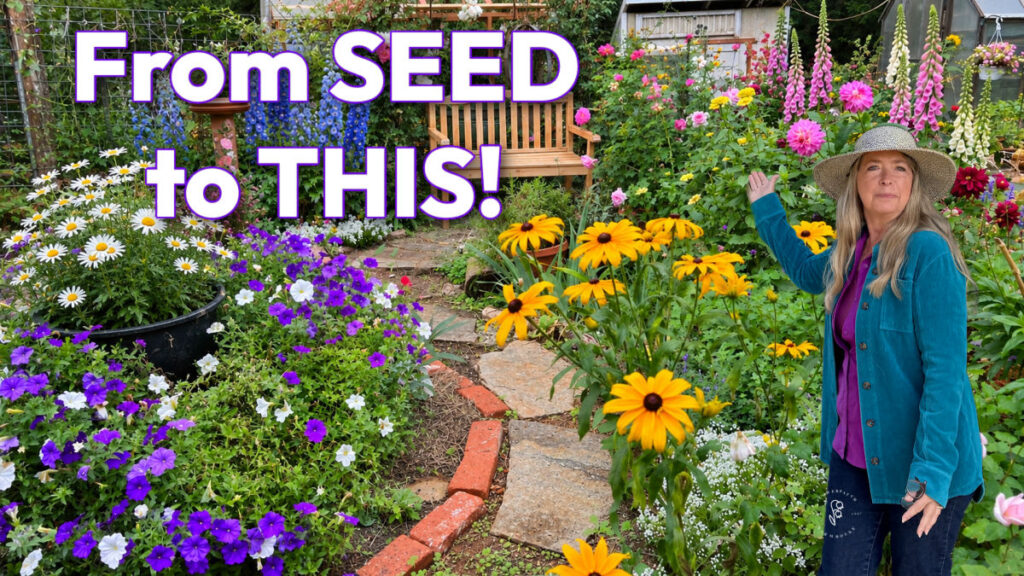
Can You Really Grow an Entire Flower Garden from Seed?
Absolutely!
You can grow annuals, biennials, and perennials from seed, giving you everything you need to create a colorful cottage garden that gets better with each passing year.
The trick is knowing which flowers to grow, when to start them, and how to combine them in your garden.
You don’t need to grow everything at once, either.
I like to think of a seed-grown garden as something that develops over time. You start with a few perennial plants that will become the backbone of your garden, then add annual flowers to fill in the spaces while those perennials mature.
By the second or third year, many of your perennials will have filled out beautifully, and you’ll have an established-looking garden without spending a fortune on mature plants.
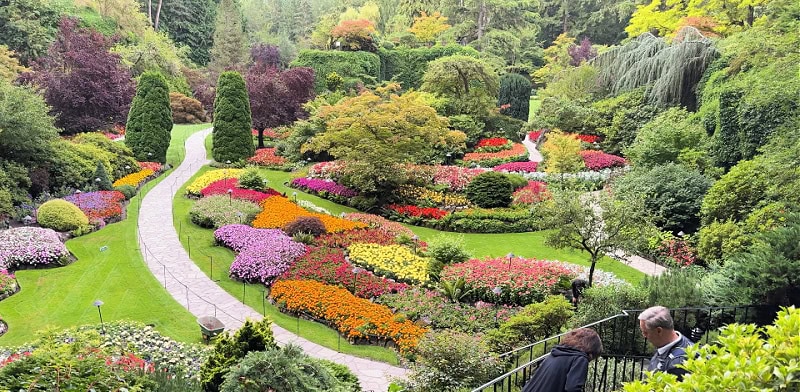
Start With a Simple Cottage Garden Plan
Before you order a pile of seed packets, take a little time to think about the garden you want to create.
It doesn’t have to be complicated.
In fact, I think starting with a smaller garden bed is one of the best things a beginner can do.
A 4-foot by 8-foot bed is a wonderful starting point. It’s large enough to grow a lovely combination of flowers but small enough to manage without becoming overwhelming.
When planning your garden, consider three things:
- Plant height: Put taller flowers toward the back, medium-height plants in the middle, and shorter flowers along the front. Unless this is an island bed, then you would change it up to tall flowers in the center, medium in front of those, and the shorter flowers along the edge.
- Bloom times: Choose flowers that bloom at different times so you have color throughout the growing season.
- Growing conditions: Make sure the flowers you choose will thrive in the amount of sunlight, soil, and moisture your garden receives.
Most of the flowers I’m sharing here prefer full sun, although some, such as foxgloves and columbines, appreciate a little afternoon shade in warmer climates.
Remember, a cottage garden doesn’t need to be perfectly arranged. I actually prefer the relaxed look of flowers mingling together.
That’s part of its charm!
Choose a Combination of Annuals, Biennials, and Perennials
If you want a garden that looks beautiful the first year but also improves over time, I recommend growing a combination of all three.
Perennial Flowers: The Foundation of Your Garden
Perennials are plants that live for more than two years, although some are much longer-lived than others.
They’re especially valuable when you’re gardening on a budget because you don’t have to replace them every spring.
Some of my favorite perennial flowers to grow from seed include:

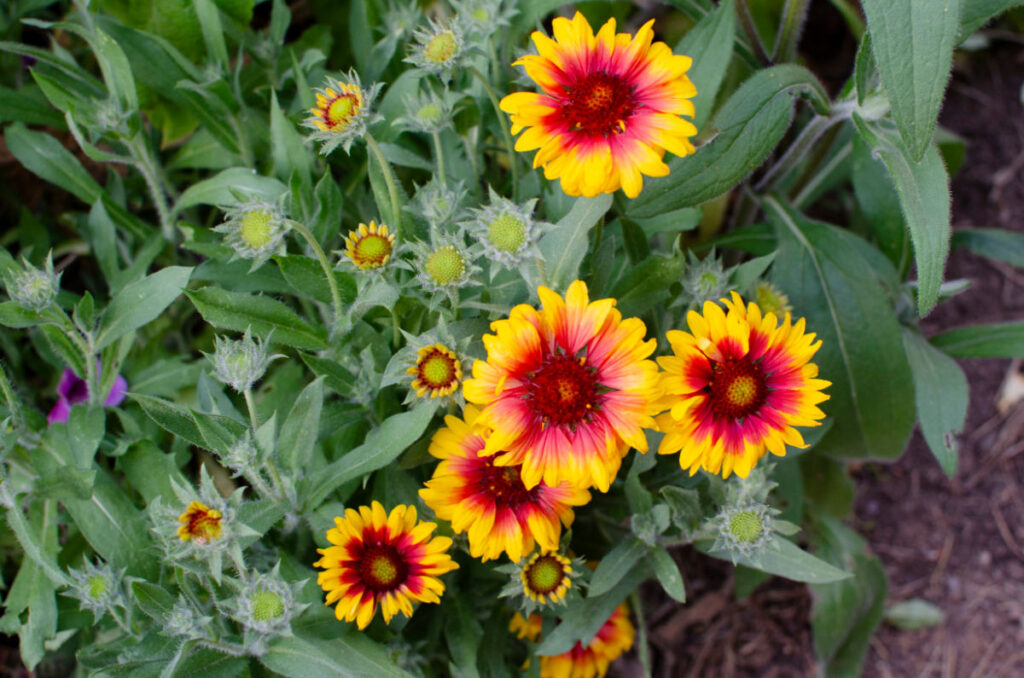
Gaillardia (Blanket Flower)
Penstemon: Two I particularly love growing is Wedding Bells Hummingbird Penstemon and Dazzler Blend.
Yarrow
Delphiniums
Coreopsis
Biennials: Classic Cottage Garden Flowers
Biennials typically spend their first year developing roots and foliage, then bloom during their second year.
Some behave as short-lived perennials, especially when conditions suit them.
My favorites include:
- Hollyhocks
- Foxgloves
- Sweet William
- Canterbury bells
Hollyhocks and foxgloves are especially lovely for adding height to the back of a flower bed.
Just remember that some may not bloom the first year.
That’s perfectly fine! You’re building a garden that will continue to develop. But some varieties do bloom the first year; check your seed packet- it should tell you.
Annual Flowers: Color the Very First Year
Annuals are what make a new seed-grown garden look colorful while the perennials are still small.
These are some of my favorites:
- Zinnias: Wonderful summer color and excellent cut flowers.
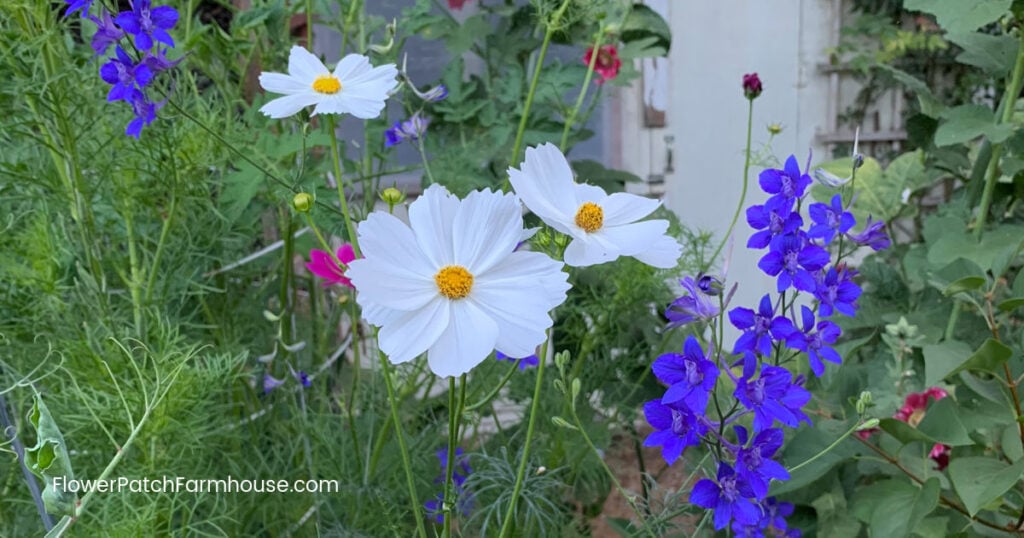
- Cosmos: Airy flowers that look beautiful mingling with other plants.
- Marigolds: Cheerful, reliable flowers that bloom through summer.
- Sunflowers: Great for adding height and attracting pollinators.
- Calendula: Beautiful flowers that thrive in cooler weather.
- Sweet alyssum: A lovely low-growing flower for softening garden edges.
- Annual phlox: Adds colorful clusters of flowers to cottage garden beds.
- Larkspur: Beautiful upright flower spikes that thrive in cool conditions.
- Poppies: Lovely flowers that are generally best direct-sown where they’ll grow.
You don’t need all of these in one garden.
Choose a few that appeal to you and complement your perennial flowers.
Which Flower Seeds Should You Start in Winter?
This is where things get interesting!
Not all flower seeds should be started at the same time, and not every seed benefits from being exposed to freezing temperatures.
I like to divide them into three groups.
1. Perennial Seeds That Benefit From Cold Stratification
Cold stratification is the process of exposing seeds to cold, moist conditions to help overcome dormancy.
In nature, many seeds fall to the ground in autumn, experience winter weather, and germinate when conditions improve in spring.
Winter sowing allows us to take advantage of that natural process.
Good candidates include certain species or varieties of:
- Echinacea
- Rudbeckia
- Penstemon
- Hardy geraniums
- Delphiniums
- Columbines
Not every species or variety requires cold stratification, so always check the seed packet for specific instructions.
2. Hardy Annuals That Enjoy Cool Conditions
Some annual flowers don’t require cold stratification but can germinate or grow well during cooler weather.
Examples include:
- Larkspur
- Poppies
- Bachelor buttons
- Calendula
- Sweet peas
Many of these are excellent choices for fall or winter direct sowing in suitable climates.
Poppies and larkspur, in particular, are often better sown directly into the garden rather than transplanted.
3. Warm-Season Annuals to Start Later
This is an important distinction because I often see people recommending winter sowing for practically everything.
But some flowers simply don’t benefit from sitting in cold, wet potting mix for months.
These include:
- Zinnias
- Cosmos
- Marigolds
- Sunflowers
These flowers generally germinate best when the soil has warmed.
You can start them indoors closer to your last frost date or direct sow them outdoors once conditions are suitable.
I prefer not to winter sow zinnias and cosmos in the coldest part of winter because prolonged cold, wet conditions can cause the seeds to rot.
There’s no reason to waste good seed when waiting a few months can give you much better results.
How to Winter Sow Flower Seeds
Winter sowing is one of my favorite ways to start hardy perennials because it’s inexpensive and doesn’t require a lot of equipment.
You can use recycled milk jugs, clear plastic containers, or other suitable containers that let in light and provide drainage.
The basic process is simple:
- Prepare your container with drainage holes.
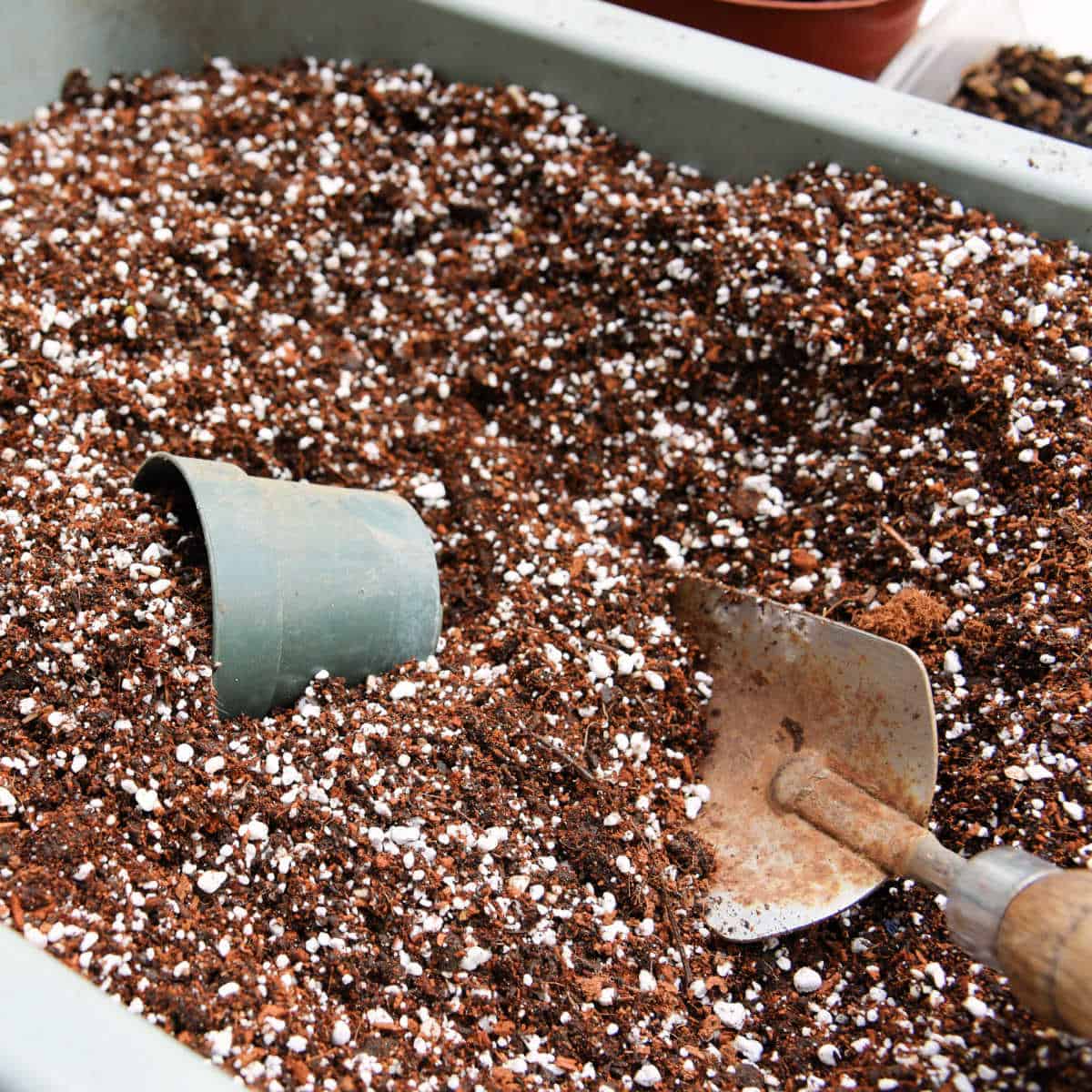
- Add several inches of moistened potting mix.
- Sow your seeds according to their recommended depth.
- Label the container with the flower name and sowing date.
- Place the container outdoors where it receives natural winter conditions.
- Check moisture periodically and wait for germination when temperatures become suitable.
The containers act like miniature greenhouses, helping protect the seeds and seedlings while allowing them to experience outdoor conditions.
I have detailed tutorials that walk you through the entire process:
Winter Sowing Seeds in Milk Jugs
You don’t have to use milk jugs, either. I’m experimenting with larger clear storage containers for starting multiple varieties of seeds.
One thing I’ve learned is that the sides of the container can be just as important as the top when it comes to allowing winter sunlight to reach your seedlings.
When Should You Start Your Flower Seeds?
I like to begin winter sowing around the winter solstice in December, but that doesn’t mean every seed needs to be planted that day.
Your local climate and the type of flower you’re growing matter much more than the calendar.
Here’s a simple guide to help you plan.
| Time of Year | What to Start |
|---|---|
| December–January | Hardy perennials with cold-stratification requirements |
| February–March | Additional hardy perennials and cool-season flowers, as appropriate for your climate |
| March–April | Warm-season annuals indoors, timed to your last frost date |
| After frost danger passes | Direct sow zinnias, cosmos, marigolds, and sunflowers when soil temperatures are suitable |
This schedule is a starting point, not a universal rule.
For example, I garden in the Northern California mountains, where we can have snow, freezing nights, and unpredictable spring weather.
Someone gardening in a mild winter climate may be able to start certain seeds much earlier, while someone in a colder region may need to wait longer.
Always pay attention to your local conditions.
How to Plan a 4′ x 8′ Cottage Garden From Seed
You don’t need a huge garden to grow a beautiful combination of flowers.
A small 4-foot by 8-foot bed is a wonderful place to begin.
I like to start by choosing one or two taller flowers, several medium-height flowers, and a few shorter annuals to fill in around them.
Here are three combinations that would make lovely cottage garden beds.
Garden Plan 1: A Classic Cottage Garden
For a traditional cottage garden look, try combining:
- Hollyhocks for height
- Delphiniums for beautiful blue flower spikes
- Echinacea for summer color
- Shasta daisies for classic white flowers
- Compact zinnias for colorful annual blooms
- Sweet alyssum to soften the edges
This combination gives you a lovely mixture of flower shapes, heights, and colors.
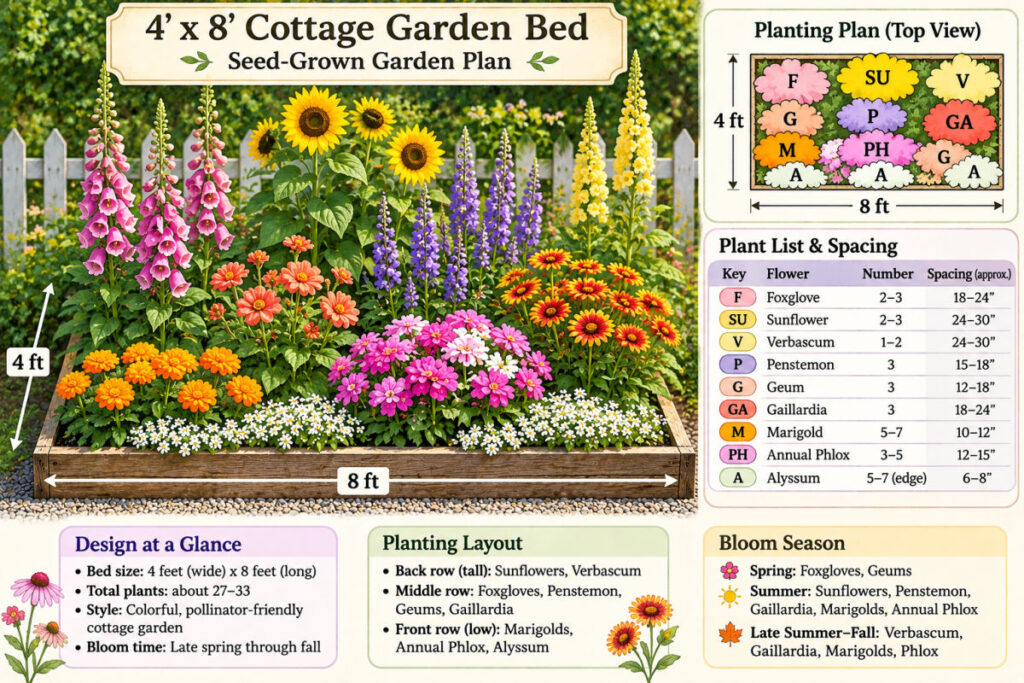
Garden Plan 2: A Soft Pink, Blue, and White Garden
If you prefer softer colors, try:
- Pink hollyhocks
- Blue larkspur
- Tall white verbascum
- Blue columbines
- White salvia
- Pink dwarf zinnias
I love the idea of combining tall flower spikes with smaller, rounded flowers.
Just remember that some of these plants bloom at different times, which helps extend the season of interest.
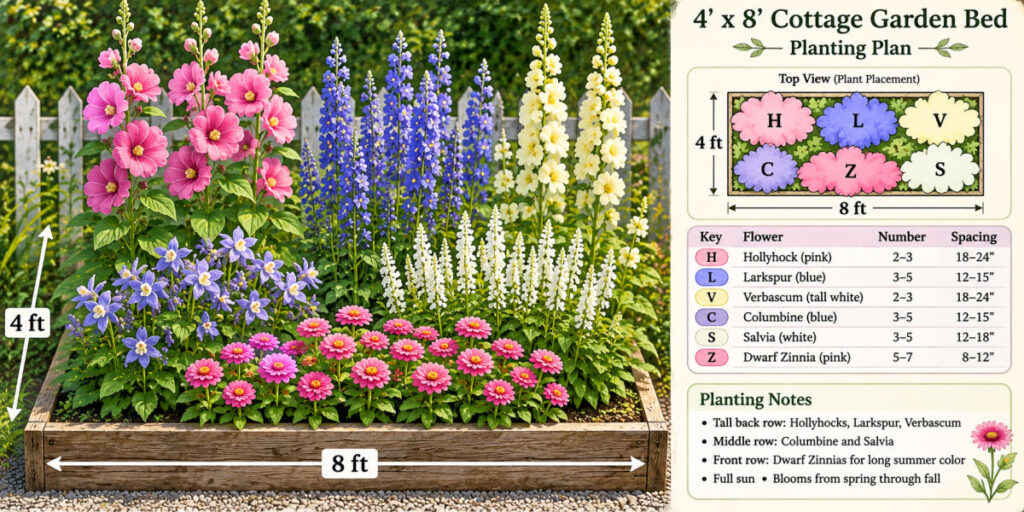
Garden Plan 3: A Warm and Cheerful Cottage Garden
For a garden filled with sunshine colors, try:
- Red hollyhocks
- White echinacea
- Golden rudbeckia
- Gaillardia
- Yellow coreopsis
- Orange marigolds
The white echinacea helps break up all those bold colors, while the marigolds add plenty of cheerful summer blooms.
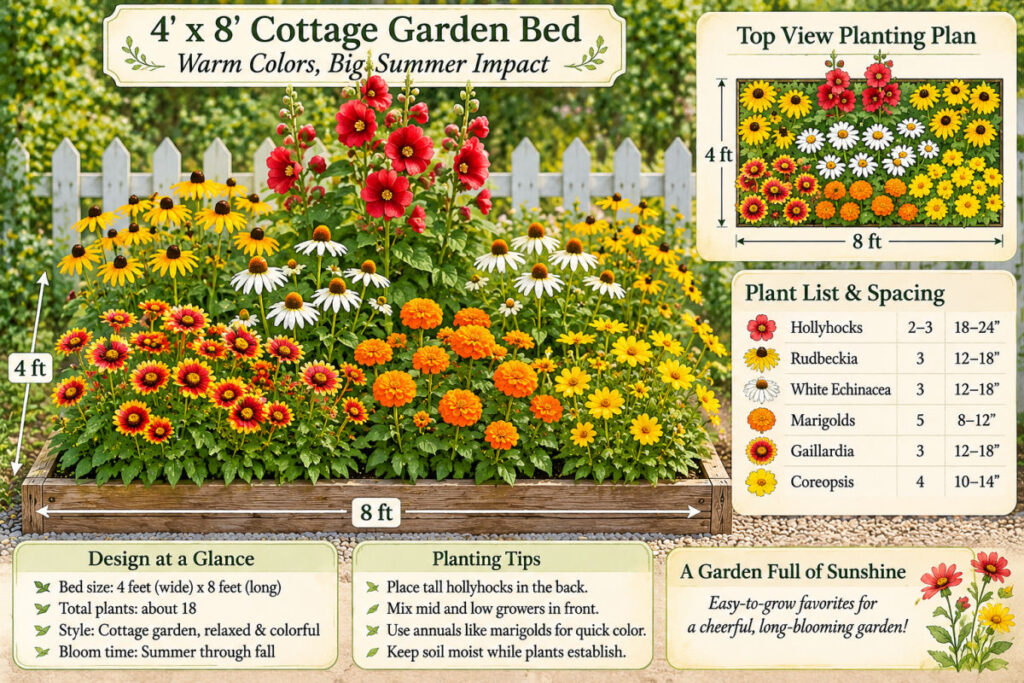
A note about spacing: These are plant combinations, not instructions to squeeze several of every flower into one small bed. Choose compact varieties where possible, allow room for mature perennials, and use annuals to fill temporary gaps.
What to Do When Your Winter-Sown Seeds Germinate
One of the most exciting parts of winter sowing is checking your containers in spring and discovering little green seedlings.
But don’t rush to transplant them!
Seedlings need time to develop a healthy root system before moving into the garden.
As temperatures warm, you’ll want to:
- Keep the potting mix evenly moist without making it soggy.
- Open or ventilate containers to prevent overheating.
- Protect tender seedlings during unusually hot weather.
- Wait until seedlings are large enough to handle before separating them.
- Transplant them at the proper spacing for their mature size.
Because winter-sown seedlings have been growing outdoors, they’re already accustomed to many natural conditions.
However, seedlings grown inside protected containers may still need a little adjustment before being exposed to full sun and wind.

How to Keep Your Seed-Grown Garden Blooming All Season
One of the secrets to a beautiful cottage garden is choosing flowers with different bloom times.
You don’t want everything flowering for two weeks and then leaving you with nothing but green foliage.
I like to include a combination of early, midseason, and late-blooming flowers.
Spring into Early Summer
Columbines, larkspur, poppies, and many foxgloves can provide early color.
Summer
Echinacea, Shasta daisies, hollyhocks, coreopsis, gaillardia, and zinnias help carry the garden through summer.
Late Summer into Fall
Rudbeckia, zinnias, cosmos, marigolds, and some gaillardias can continue providing color until cold weather arrives.
Of course, exact bloom times depend on your climate and the varieties you choose.
Some perennial and biennial flowers may not bloom during their first growing season, so annuals are especially helpful when you’re starting a new garden.
My Best Tips for Growing an Entire Garden From Seed
After years of growing flowers from seed, there are a few things I wish every beginner knew.
Don’t Plant Every Seed in the Packet
It’s tempting, especially when you’re excited about starting a new garden.
But remember that even a small packet can produce a surprising number of plants.
Start with what you have room to grow.
Expect Some Failures
Not every seed germinates, and not every seedling survives.
That’s gardening!
Even experienced gardeners have seeds that don’t sprout or plants that don’t thrive.
Don’t let that discourage you.
Give Perennials Time
Many perennial flowers spend their first year establishing roots and foliage.
They may not look impressive right away, but give them time.
Some of my favorite garden plants took a year or two to really become beautiful.
Choose Flowers That Suit Your Climate
This is especially important.
I garden where summers are hot and dry, but winters can bring freezing temperatures and snow.
Plants that thrive in my garden may behave differently in yours.
Pay attention to your local conditions rather than relying only on your USDA hardiness zone.
Remember That Your Garden Doesn’t Have to Be Perfect
I think this is one of the most important lessons.
You don’t need to plant an entire garden in one weekend.
Start with a few flowers, see what grows well, and add more as you go.
A cottage garden is always changing, and that’s part of what makes it so enjoyable.
Start Your Flower Garden This Winter!
If you’ve been dreaming about creating a beautiful cottage garden but don’t want to spend a fortune buying plants, growing from seed is a wonderful way to begin.
You can start planning now, gather your seeds and containers, and begin winter sowing the appropriate flowers when winter arrives.
Then, as spring approaches, you can add easy annuals for plenty of color while your perennial flowers establish themselves.
Before you know it, you’ll have a garden filled with flowers you grew yourself.
And I can’t think of a more satisfying way to garden!
What flowers would you love to grow from seed this year? I’d love to hear what you’re planning for your garden.
Happy Gardening!
Hi, I’m Pamela
With 45 years of hands-on gardening experience, I love sharing practical tips, proven techniques, and inspiration drawn from my own gardens. My goal is to nurture your confidence, spark your passion, and help make every step of your gardening journey more enjoyable.