How to Divide Coneflowers: Easy Steps for More Plants
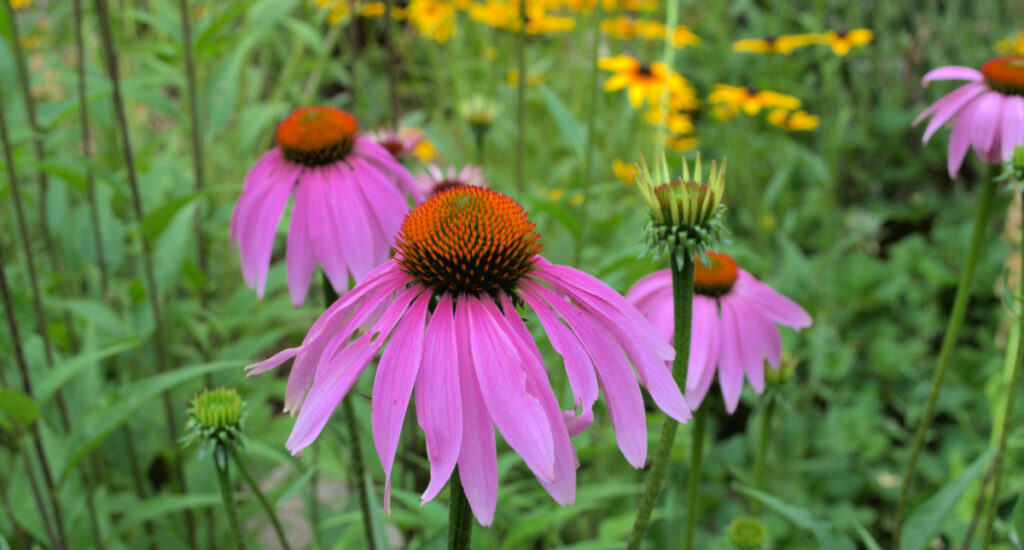
Coneflowers are such a lovely addition to a cottage garden, and once you have a favorite, it is tempting to tuck a few more into other beds. Dividing an established clump can help you do just that.
I love growing echinacea from seed, but when I want more plants like a particular coneflower already growing in my garden, division is a useful option. In this tutorial, I share how I divided my White Swan echinacea and what to look for before you split your own plants.
You do not need an elaborate collection of tools. The important part is choosing a suitable clump and giving each new piece enough roots and a growing point to become a plant of its own.
Dividing coneflowers at a glance:
- Divide an established, healthy clump in early spring or early fall during mild weather.
- Lift the root ball, identify sections with growing points and attached roots, and separate them with a clean, sharp tool.
- Replant at the original depth, water thoroughly, and monitor moisture while the divisions establish.
This post contains affiliate links. If you make a purchase after clicking a link I may make a small commission at no cost to you.
Can You Divide Coneflowers?
Yes! Established purple coneflowers (Echinacea purpurea) and suitable garden cultivars can be divided when they have developed a clump with several growing points.
Before you dig, look at the base of the plant. You want enough growth there to make more than one substantial section. A small, recently planted coneflower may need more time before it is ready.
This guide focuses on clump-forming garden echinacea. Do not assume every echinacea species has the same root system or will split as easily. NC State Extension’s purple coneflower profile is a helpful reference for identifying this commonly grown species.
Division produces plants with the same genetic makeup as the parent. Seed-grown offspring, especially from cross-pollinated plants or hybrids, may differ. That makes division particularly useful when you want to preserve a favorite flower color or form.
When to Divide Coneflowers
Early spring or early fall are the usual choices. Clemson Extension specifically lists spring and fall for dividing echinacea. Avoid hot, dry weather and, where possible, divide when the plant is not flowering.
But to be completely transparent, I often need to move things and I will divide if I feel the plant needs it anytime. I just make sure to place the pots of the freshly divided plants in the shade until they recover or if planting out in the garden, I provide shade until I feel it can go it alone.
Early spring
Look for new shoots emerging around the crown. These help you see where the plant can be separated, and the smaller amount of foliage makes the clump easier to handle.
Wait until the soil is workable. If your shovel meets frozen soil or the planting hole fills with water, conditions are not suitable yet.
Early fall
Fall can also work, provided the divisions have time to establish before winter. University of Minnesota Extension recommends allowing four to six weeks before the ground freezes when dividing perennials in fall. Ground freezing is different from the first light frost.
Here in my Northern California garden, a September date does not necessarily mean cool weather has arrived. Check the forecast and your soil conditions rather than following a calendar date alone.
If fall heat hangs on until your planting window is nearly over, waiting until spring may be the better choice.
Does Your Coneflower Need Dividing?
A healthy coneflower does not need to be dug up simply because another year has passed. Consider division when a mature clump has become crowded or when you want additional plants.
Smaller flowers, less vigorous growth, and a thinning center can be reasons to inspect a clump, but these symptoms do not automatically mean division is the answer. Check for shade, drought, poor drainage, and disease first.
For general growing conditions, see my guide to growing echinacea coneflowers.
What You Need Before You Start
Gather your supplies and decide where the divisions will go before lifting the plant.
- A shovel or digging fork
- A sharp garden knife or spade for separating a firm clump
- Gardening gloves
- Pruners for damaged roots and awkward stems
- Water for the plant and your new planting areas
- Pots with drainage holes and potting mix, if you are not replanting in the garden
- Labels if you are dividing more than one variety
A tarp or shallow tray can give you a convenient place to inspect the root ball. Set it near your work area so you do not have to carry a heavy clump across the garden.
Choose pots that accommodate the roots without bending them into a tight bundle. The container should suit the division you actually have; every piece does not need the same size pot.
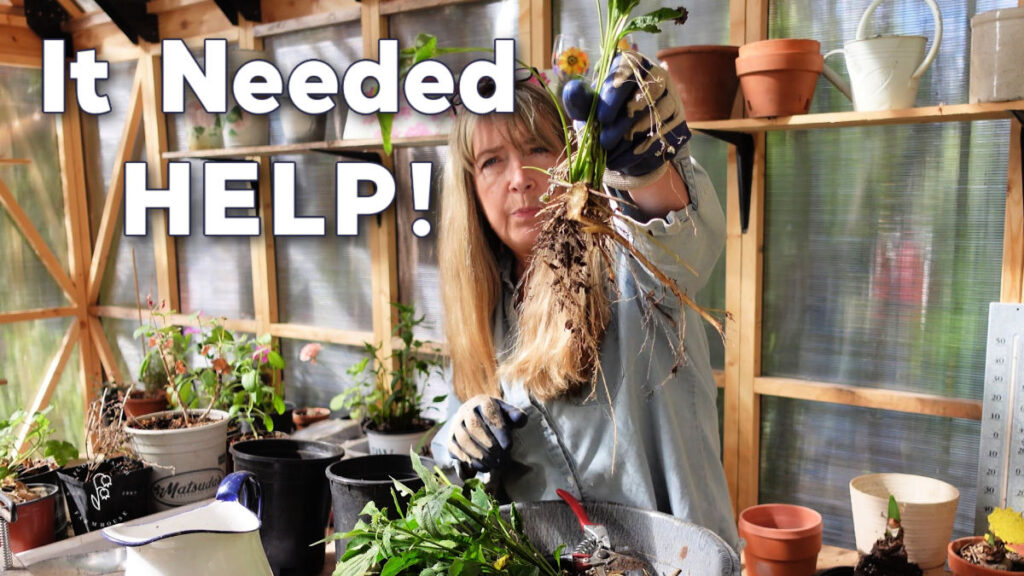
In this video I shared how I placed different sized divisions in different sized pots.
How to Divide Coneflowers Step by Step
1. Prepare the destination
Have the planting holes or pots ready first. It is much easier to concentrate on separating the clump when you are not also wondering where each piece will go.
Choose a garden location with suitable sun and well-drained soil. Allow space for the mature variety rather than arranging the divisions according to their newly reduced size.
2. Water beforehand if the soil is dry
Water the plant the day before dividing if necessary. Aim for moist, workable soil, rather than mud. Choose a cool or overcast day, and keep lifted divisions shaded and moist while you work.
3. Clear the base and lift the clump
Move loose mulch and debris aside so you can see the base of the plant. Notice where the stems or new shoots emerge before putting your shovel in.
Work around the outside of the clump, allowing room for the roots. Dig underneath and gently lift it free. If it resists, investigate where roots are still attached rather than pulling hard on the stems.
The objective is to keep a useful root ball, not to remove the plant as quickly as possible.
4. Find the growing points
Gently loosen enough soil to see how the crown and roots connect. If the soil hides everything, a gentle rinse can help, but there is no need to scrub the roots clean.
The crown is the area where the shoots meet the roots. Look for sections that have both a growing point and attached roots.
Before making a cut, trace out your proposed pieces. Ask yourself: will each one have a portion of the crown capable of producing shoots, plus roots to support that growth?
5. Separate substantial sections
Some sections may loosen naturally; others need a clean cut through the crown. Use a sharp tool and work carefully rather than tearing at a stubborn section.
Keep several vigorous shoots or buds and a healthy supply of roots together where the clump allows. A general guideline for perennial divisions is three to five vigorous shoots per section, but it isn’t written in stone.
Do not chase a particular number of plants. Two substantial divisions are a better starting point than several tiny pieces with very little root attached.
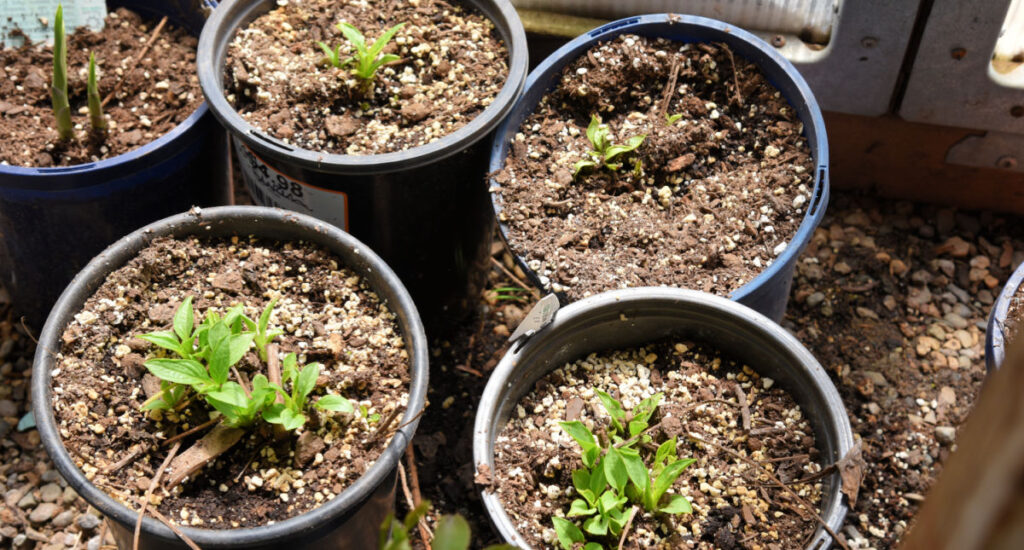
In my original White Swan demonstration, I ended up with five divisions and put them into one-gallon pots. Your clump may produce fewer or more, depending on its size and structure.
6. Replant and water
Replant promptly, keeping the crown at its previous soil level. Settle soil around the roots and water thoroughly. The same original planting depth applies when potting divisions.
Label the plants before moving on to the next variety. Dormant divisions can look remarkably alike!
Caring for Newly Divided Echinacea
An established coneflower’s drought tolerance does not mean a newly divided piece can be ignored. Its root system has been disturbed, so pay attention while it settles in.
Check the soil around the roots rather than watering on a fixed schedule. Rainfall, temperature, drainage, and container size all affect how quickly moisture is lost. Aim for adequate moisture without keeping the roots constantly saturated.
If you have used pots, place them somewhere you can easily check them. A sheltered location away from intense afternoon heat is useful while they recover; gradually return actively growing plants to suitable sun.
Do not keep lifting the divisions to look for new roots. Watch for healthy new growth instead, and give them time.
Common Mistakes to Avoid
Dividing a plant that is still too small. If there is only one compact crown and very little root mass, let it grow.
Cutting without checking the crown. A chunk of roots is not necessarily a complete division. Identify the growing points first.
Expecting every clump to make five plants. My result is an example, not a target. Let the plant determine how many useful sections you can make.
Choosing a convenient date during unsuitable weather. A free afternoon during a heat wave may be better spent preparing the new planting area.
Confusing slow recovery with failure. A division needs time to establish. More fertilizer or more water is not automatically the solution to slow growth.
Questions About Dividing Coneflowers
Will divided coneflowers bloom the next season?
They may, but flowering depends on division size, timing, and growing conditions. Let healthy establishment be your first goal; not every small division will bloom immediately.
Should I plant divisions in pots or directly in the garden?
Either approach is useful. Replant directly when the destination is ready. Pots are convenient if you need time to choose a location, but they add the responsibility of monitoring container moisture.
Do I need to divide coneflowers every year?
No. Look at the condition and size of the plant. There is no benefit in repeatedly disturbing a healthy clump that has not developed enough growth to split.
Can I grow more coneflowers from seed instead?
Yes, for seed-producing types. Seed growing is a lovely way to increase your garden on a budget. Choose division when your aim is to reproduce the particular plant you already have; seed-grown plants may vary.
More of a Garden Favorite
Dividing echinacea gives you a chance to enjoy a favorite plant in another corner of the garden. Start with a suitable clump, keep useful roots and growing points together, and give the divisions some attention as they establish.
Have you divided your coneflowers, or are you planning to try it? Tell me which varieties you are growing in the comments. I always enjoy hearing what is doing well in your garden.
I love Echinacea and I have written all about how to grow them before here at Flower Patch. I have collected quite a few varieties and many of them are sterile hybrids or easily cross-pollinate and won’t come true from the seeds they produce.
Happy Gardening!
Hi, I’m Pamela
With 45 years of hands-on gardening experience, I love sharing practical tips, proven techniques, and inspiration drawn from my own gardens. My goal is to nurture your confidence, spark your passion, and help make every step of your gardening journey more enjoyable.


Since they are hardy down to zone 3 then they should be fine but if you are worried then bury the pot in the ground before freezing weather which will help insulate them a bit. They will easily pull up again in the spring.
Hi! I live in zone 6 and would like to ask if I can pot the plants and leave them over winter in my climate?
Years ago I had coneflower called double bubble or double bubble gum, they were pink but I have not been able to find them anywhere in my area. Was I dreaming or is there such a thing. But I have to get them by mail? Thank you
Thank you so much for this very helpful video. I have two coneflower plants that I like very much and was wondering if I would be able to find more of the same variety. Now I know how to divide the ones I have. I can’t wait for fall to arrive in New England so can put your lesson into practice.
My Dad would have enjoyed your site. He loved flowers! I don’t have his green thumb but your site reminds me of him and how he spent time pruning, weeding, splitting plants, etc. Thanks for sharing!