5 Things to Do When Tomato Plants Flower
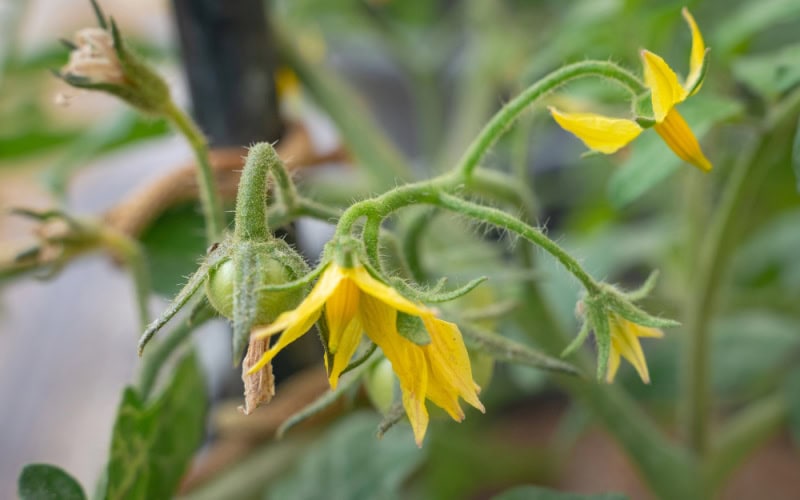
Seeing those first yellow blossoms is exciting, but knowing what to do when tomato plants flower can make all the difference in your harvest. This is also a turning point for your plant. What you do right now can make the difference between a few fruits and an abundant harvest.
Here are five simple steps to help your tomato plant thrive once it starts flowering.
This post contains affiliate links. If you make a purchase after clicking a link I may make a small commission at no cost to you.
What to Do When Tomato Plants Start Flowering: 5 Simple Steps
1. Give It a Steady Feeding
Flowering means your tomato plant is shifting its energy from just growing leaves to producing fruit. When tomato plants start flowering, many will tell you it’s time to switch from a nitrogen-heavy fertilizer to one that supports flowers and fruit — something with more phosphorus and potassium.
But that is total bunk. Did you know that most soils have plenty of phosphorus and potassium already present? What you don’t want to do is give your plants too much nitrogen. Balance is everthing. If you are feeding your soil, then you are ahead of the game.
I use a balanced organic liquid fertilizer that nourishes both the plants and the soil, and is safe to apply in all weather without risk of burning.
Note: Synthetics can cause chemical salts to accumulate in your soil, blocking the absorption of vital nutrients.
When you use the noted balanced one-size-fits-all fertilizer, you keep it simple and earth-friendly!
2. Make Sure It Gets Even Watering
Tomatoes love consistency. Uneven watering can lead to blossom end rot or fruit cracking. Aim to water deeply, about once or twice a week, depending on your weather and soil. In hot spells, you may need to water more often.
A good mulch layer — straw, shredded leaves, or even grass clippings — helps hold in moisture, keeps roots cooler, and reduces stress on the plant.
There are many misconceptions about Blossom End Rot, so I spelled it all out in another post.
Prevent Blossom End Rot!
3. Support and Tie Them Up
If you haven’t already, now’s the time to make sure your tomato plants have sturdy support. Flowers mean fruit is coming, and fruit means weight.
Use cages, stakes, or trellises to keep plants upright and off the ground. Gently tie stems with soft plant ties, strips of old t-shirts, or garden twine. This not only prevents breakage but also improves air circulation, which helps prevent disease.
Related: Easy DIY Plant Supports
4. Encourage Pollination
Tomato flowers need pollination to set fruit. Outdoors, wind and pollinators do the job, but you can give them a little help. Plant some flowers and herbs nearby that draw in the pollinators.
Alternatively, you can gently shake the plant, tap the flower clusters, or use an electric toothbrush near the blooms to mimic a bee’s buzz.
If your plants are in a greenhouse or an area with few pollinators, this step is especially important.
Best Flowers for Your Veggie Garden
5. The Truth About Tomato Pruning
Tomatoes often grow side shoots, or “suckers,” where the leaf stem meets the main stem. Many claim removing them helps you get a better harvest, but studies have shown the opposite. Pruning off suckers reduced yield by 38%!
Suckers are more stems and not anything that ‘sucks’ energy from the plant or fruit production. Nature has them there for a reason. Personal side-by-side testing showed me that removing suckers resulted in a poorer harvest, sunscalded fruit, and it certainly did not improve the flavor of what I did harvest.
The Truth About Tomato Suckers
The testing I did in my own garden showed that planting two tomatoes spaced 3 feet apart and left unpruned, produced more tomatoes by weight than 3 tomatoes planted more closely together and the suckers pruned away.
So don’t waste your precious time and resources (an extra tomato plant takes more water and feeding) when you don’t need to.
Note: Some areas get high humidity and lots of summer rain, and light sucker pruning can help with better airflow, thus curtailing fungus problems.
Final Thoughts
Knowing what to do when tomato plants flower ensures a stronger, healthier harvest. With a little extra care now, you’ll be rewarded with baskets of sun-ripened tomatoes later.
I always say, a few minutes of attention at flowering time pays you back tenfold when you’re standing in the kitchen with a basket overflowing with sun-warmed tomatoes.
Happy Tomato Planting!
Hi, I’m Pamela
With 45 years of hands-on gardening experience, I love sharing practical tips, proven techniques, and inspiration drawn from my own gardens. My goal is to nurture your confidence, spark your passion, and help make every step of your gardening journey more enjoyable.