Is Aloe Vera a Natural Rooting Hormone? (What Science Actually Says)
If you’ve spent any time in the gardening world—especially online—you’ve probably heard this claim:
“Just use aloe vera instead of rooting hormone.”
It sounds simple, natural, and budget-friendly… which is exactly why it’s so appealing.
But is it actually true?
Let’s set aside the trends for a moment and look at what science—and real-world results—actually tell us.
What a Real Rooting Hormone Does
Before we talk about aloe vera, it helps to understand what a true rooting hormone actually is.
Commercial rooting powders and gels contain plant hormones called auxins (most commonly IBA or NAA). These are not just “helpful”—they are direct signals to the plant to form roots.
They trigger cell changes right at the cut site that lead to root development. That’s why they work so reliably, especially for harder-to-root plants.
This is our baseline.
So… Does Aloe Vera Do the Same Thing?
Short answer: No, not in the same way.
Aloe vera is not a standardized source of auxins. While it may contain small, naturally occurring plant compounds that resemble growth hormones, the levels are:
- Very low
- Highly variable
- Not consistent from plant to plant
That means aloe vera does not function as a true rooting hormone in the way commercial products do.
Why Do People Think Aloe Vera Works?
This is where things get interesting—and where a lot of confusion comes in.
Aloe vera can improve the success rate of cuttings, but not for the reason most people think.
Its strongest, most consistent benefit is this:
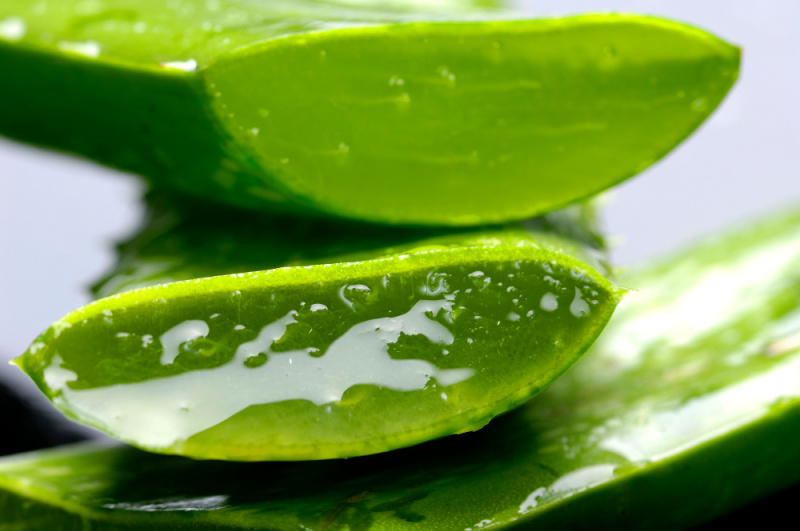
Aloe vera is antimicrobial
It has natural antibacterial and antifungal properties, which means it can:
- Help prevent rot at the cut site
- Protect vulnerable plant tissue
- Improve overall survival of the cutting
And honestly, this matters more than many people realize.
Because a cutting that rots will never root—no matter what you use.
Does Aloe Vera Help With Rooting at All?
Sometimes, yes.
According to established plant propagation research, true rooting hormones and natural alternatives like aloe vera work in very different ways.
Some studies have shown that aloe vera can produce rooting results similar to synthetic hormones in certain plants. But here’s the key:
- Results are inconsistent
- It depends heavily on the plant type
- It does not perform reliably across the board
In other words, aloe vera might help—but it’s not something you can count on every time.
What Aloe Vera Is Actually Doing
When you dip a cutting in aloe vera, you’re mostly getting:
- A protective coating that holds moisture
- A reduction in harmful microbes
- A gentle, possible boost from minor growth compounds
What you are not getting is a strong, targeted hormonal signal to grow roots.
The Honest Bottom Line
If you want the most reliable, repeatable results:
- Use a real rooting hormone for difficult cuttings
If you prefer a natural, budget-friendly approach:
- Aloe vera can be helpful, especially for easy-to-root plants
But scientifically speaking:
Aloe vera is not a true replacement for rooting hormone—it’s more of a supportive helper.
A More Thoughtful Way to Look at It
In a slower, more intentional garden, there’s room for both approaches.
You might use:
- Aloe vera, when you’re experimenting, propagating soft cuttings, or just enjoying the process
- Rooting hormone when you really want success with something special or harder to root
Because gardening isn’t about doing everything one way.
It’s about understanding what works—and choosing what fits your garden, your budget, and your goals.
If you’ve tried aloe vera for cuttings, I’d truly love to hear what worked (or didn’t). Those real-life experiences often tell us just as much as the studies do.
Hi, I’m Pamela
With 45 years of hands-on gardening experience, I love sharing practical tips, proven techniques, and inspiration drawn from my own gardens. My goal is to nurture your confidence, spark your passion, and help make every step of your gardening journey more enjoyable.


This article is based on established plant science and peer-reviewed research on rooting and plant propagation, including:
- Hartmann, Kester, Davies & Geneve — Plant Propagation: Principles and Practices (standard reference for how rooting hormones work)
- Davies, P.J. — Plant Hormones: Physiology, Biochemistry and Molecular Biology
- da Costa et al. (2013) — Hormonal control of adventitious rooting, Frontiers in Plant Science
- Hossain et al. (2021) — Effects of aloe vera gel on plant cuttings
- Cock, I.E. (2008) — Antimicrobial properties of Aloe vera
These sources support the understanding that synthetic auxins directly stimulate root formation, while aloe vera primarily offers antimicrobial protection with limited and inconsistent growth-promoting effects.