How to Grow Violas for Beautiful Fall, Winter, and Spring Color
I love violas! These cheerful little flowers may be small, but they certainly make up for their size with an abundance of blooms.
When the garden starts winding down in fall, planting violas is one of my favorite ways to bring some fresh color back into the landscape. And in my garden, they often reward me with another beautiful show when spring arrives.
One of the things I especially love about violas is their sweet fragrance. I like planting them along pathways where I can enjoy their scent as I walk through the garden. It’s subtle, but so lovely!
This post contains affiliate links. If you make a purchase after clicking a link I may make a small commission at no cost to you.
And don’t let those delicate-looking flowers fool you. Violas are surprisingly tough little plants.
Here in my Northern California mountain garden, they can spend part of winter tucked beneath the snow, only to pop back up and start blooming when the weather warms.
Whether you’re planting violas in garden beds, containers, or window boxes, here are my favorite tips for keeping them healthy and blooming beautifully.
What You’ll Learn About Growing Violas
Violas are easy to grow when you give them the conditions they enjoy. In this guide, you’ll learn:
- When to plant violas for fall, winter, and spring flowers
- How much sunlight and water they need
- How to keep violas blooming longer
- Whether violas survive freezing temperatures and snow
- How to encourage violas to reseed themselves
- Easy ways to use violas in cottage gardens and containers
What Are Violas?
Violas belong to the genus Viola, a large group of flowering plants that includes pansies, Johnny-jump-ups, and violets.
The violas commonly sold for gardens usually have smaller flowers than traditional pansies, but they often produce an abundance of blooms.
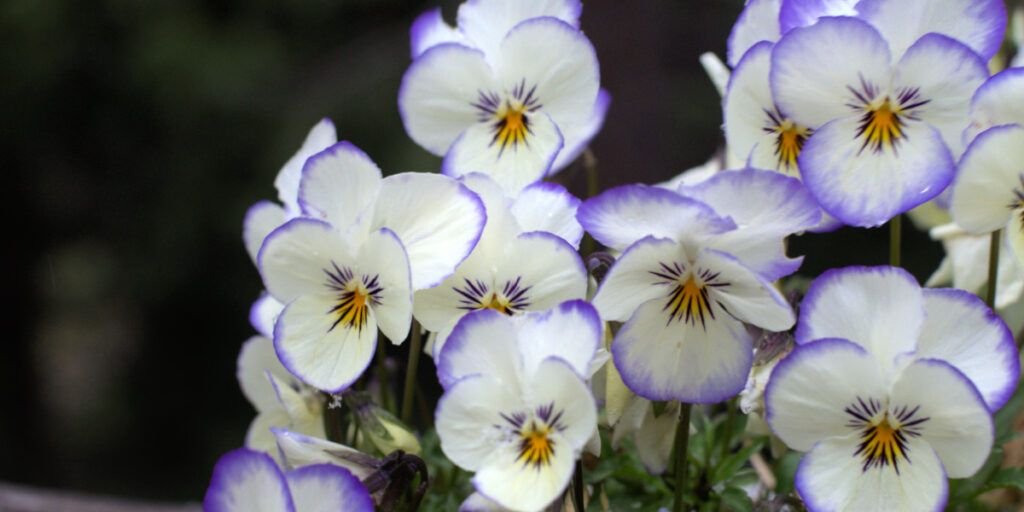
They come in beautiful shades of purple, lavender, blue, yellow, orange, cream, and white, with many varieties featuring two or more colors.
Some have those adorable little faces, while others have simpler, solid-colored flowers.
And many have a lovely, delicate fragrance.
Although pansies and violas are closely related, I find violas particularly charming because of their smaller flowers and their ability to tuck themselves into little spaces throughout the garden.
Some varieties are also excellent at reseeding, which is always a bonus in my book!
When Is the Best Time to Plant Violas?
For many gardeners, fall is one of the best times to plant violas.
Violas are cool-season flowers, which means they prefer the milder temperatures of fall and spring rather than the intense heat of summer.
I especially love planting them in fall.
When the summer flowers begin to fade, a few violas can perk up a container or flower bed with fresh, cheerful color.
The soil is usually still relatively warm, which helps newly planted violas establish roots before winter arrives.
In milder climates, violas may continue blooming through much of winter.
Here in my garden, they often bloom through fall, slow down when the really cold and snowy weather arrives, and then come back beautifully in spring.
In areas with extremely cold winters, spring planting may be a better option.
The important thing is to consider your local climate rather than relying only on your USDA hardiness zone.
Two gardens in the same zone can have very different growing conditions, particularly when it comes to summer heat.
My suggestion is to experiment!
Pick up a six-pack of violas in fall and plant them in a protected area of your garden. See how they do over winter.
You might be surprised at how well they come back in spring.
Where to Plant Violas: Sun or Shade?
Violas bloom best with plenty of sunlight during cool weather.
In fall, winter, and early spring, a location with about four to six hours of direct sun is generally a good starting point.
But as temperatures warm, a little afternoon shade can make a big difference.
In warmer climates, I prefer planting violas where they receive morning sunshine and some protection from the hottest afternoon sun.
This can help them continue blooming longer into the season.
I also like planting violas near perennials that will grow taller and fuller as spring progresses.
Early in the season, the violas enjoy plenty of sunlight. Then, as the surrounding plants grow, they provide some welcome shade.
This can help keep the violas comfortable as temperatures rise.
Of course, eventually summer heat may become too much for them, even with shade.
That’s simply the nature of cool-season flowers.
The goal isn’t to force violas to bloom all summer, but to give them the conditions they prefer for as long as possible.
How to Plant Violas in Garden Beds
Violas aren’t particularly fussy, but they do appreciate soil that drains well.
They like consistent moisture without sitting in soggy ground.
Before planting, loosen the soil and incorporate some finished compost if your soil needs improvement.
I regularly add compost and organic mulch to my garden beds, and over time these materials have helped improve my soil structure.
If your garden has heavy clay soil that stays waterlogged after rain, you may have better success planting violas in a raised bed or container.
Planting Violas Step by Step
- Choose a location with appropriate sunlight and well-drained soil.
- Loosen the soil where you plan to plant.
- Gently remove the viola from its nursery container.
- If the roots are tightly circling the pot, carefully loosen the outer roots.
- Plant at approximately the same depth it was growing in the container.
- Firm the soil gently around the roots and water thoroughly.
Space your plants according to the variety you’re growing. Many compact bedding violas can be planted around six to eight inches apart, while spreading varieties may need more room.
Once planted, keep an eye on soil moisture while the roots become established.
How to Water and Fertilize Violas
One of the nice things about violas is that they don’t require a complicated care routine.
They do appreciate consistent moisture, but that doesn’t mean keeping the soil constantly wet.
I prefer checking the soil rather than watering on a rigid schedule.
If you’re unsure whether your violas need water, feel the soil a little below the surface.
A soil moisture probe can also be helpful, especially in containers.
Watering Violas Through the Seasons
During fall, we can still have some surprisingly warm days, so I check my plants regularly.
In winter, I usually don’t need to water much because we receive rain and snow. But if you’re growing violas under a covered porch or in a particularly dry climate, they may still need occasional watering.
Spring watering depends on the weather. Some years we get plenty of rain, while other years are much drier.
Remember that containers generally dry out faster than garden beds, so violas growing in pots may need more frequent attention.
Do Violas Need Fertilizer?
In my garden beds, I don’t typically fertilize violas.
I regularly add compost and other organic materials, so additional feeding usually isn’t necessary unless the plants show signs of needing nutrients.
Containers are a little different.
Because pots are watered more frequently, nutrients can gradually wash out of the potting mix.
For container-grown violas, a light application of a balanced fertilizer can be helpful when needed.
I prefer organic fertilizers, but whichever type you choose, follow the label directions.
More fertilizer isn’t necessarily better.
How to Keep Violas Blooming Longer
If you want your violas to continue producing flowers, deadheading can help.
Deadheading simply means removing faded blooms before they finish developing seeds.
When plants begin setting seed, some of their energy goes toward reproduction rather than producing additional flowers.
Removing those spent flowers can encourage continued blooming.
I simply follow the flower stem down toward the foliage and pinch or snip it off.
You don’t have to make a big production out of it.
A few minutes while you’re walking through the garden can make quite a difference.
What if Your Violas Get Leggy?
Violas can sometimes become stretched and leggy, particularly when temperatures begin to warm.
When that happens, I give them a haircut.
I trim back the lanky stems, leaving healthy foliage and growing points, and let the plants put out fresh growth.
If the weather is still cool enough, they’ll often come back fuller and begin blooming again.
But if summer heat has really set in, pruning may not be enough to revive them.
At that point, I simply enjoy the flowers they’ve given me and make room for summer annuals.
Can Violas Survive Winter and Snow?
Yes! Many violas are surprisingly cold tolerant.
In fact, violas often handle cold weather much better than summer heat.
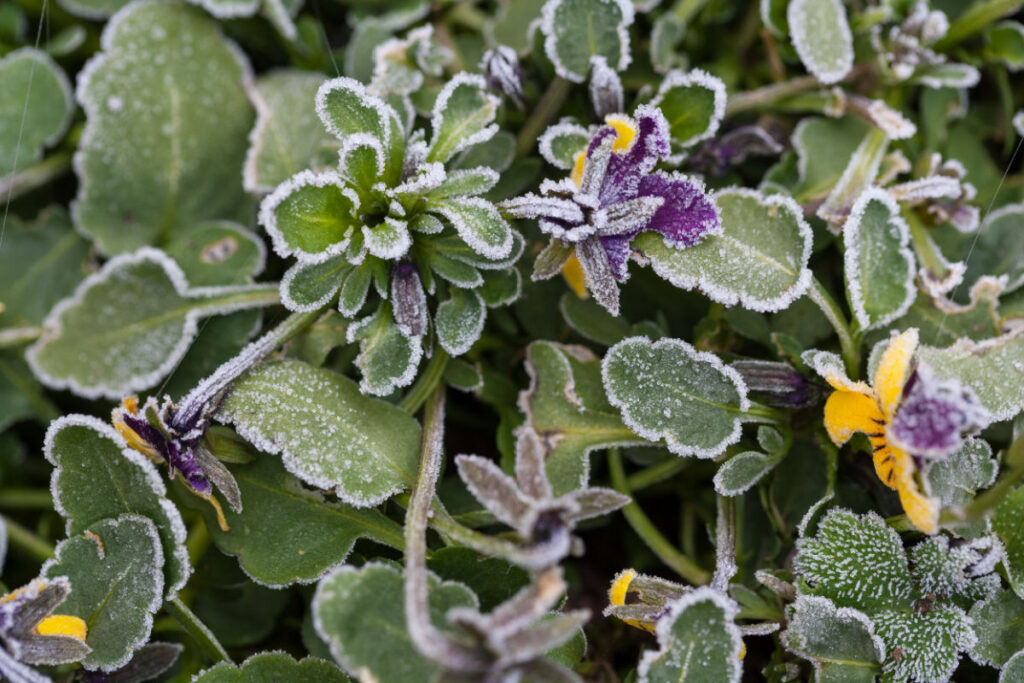
Here in my mountain garden, I’ve had violas spend part of winter beneath the snow and then return with beautiful blooms as temperatures warm.
They may look rather sad during a particularly cold spell, but that doesn’t necessarily mean they’re dead.
Once conditions improve, established plants can begin growing again.
Of course, winter survival depends on the variety, how well established the plants are, and your local conditions.
One thing to watch for is poor drainage.
Cold temperatures alone may not be the problem. Soil that remains waterlogged for long periods can damage roots and contribute to rot.
Repeated freezing and thawing can also be hard on plants, particularly if it pushes their roots out of the soil.
If you’re trying to overwinter violas, give them good drainage and enough time to establish before severe cold arrives.
Why Violas Sometimes Stop Blooming in Winter
Even when violas survive winter beautifully, they may stop flowering during the darkest, coldest part of the season.
Shorter days and low temperatures slow plant growth.
You may have heard of the Persephone Period, when daylight falls below approximately ten hours per day and growth slows dramatically for many plants.
Your violas may simply be waiting for more favorable conditions.
As the days lengthen and temperatures rise, they can begin blooming again.
Do Violas Come Back Every Year?
This depends on the type of viola you’re growing and your climate.
Some violas are perennials, while others are grown as annuals or biennials.
Even varieties that don’t survive indefinitely can sometimes return through self-seeding.
And that’s one of my favorite things about growing violas!
Violas That Reseed Themselves
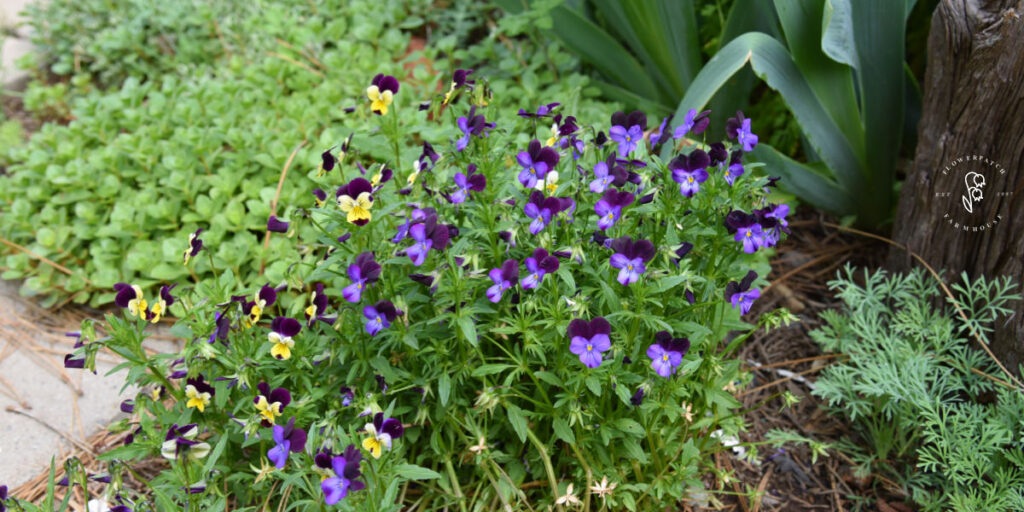
Over the years, I’ve had violas pop up in some of the most unexpected places.
They seem particularly fond of my gravel pathways.
I’ve even found little viola plants growing in cracks beside the garden, blooming away as though that’s exactly where they belong.
It always makes me smile.
Sometimes they’re just tiny plants with a few cheerful flowers, but they’re beautiful nonetheless.
And who doesn’t love free plants?
If you’d like your violas to reseed, allow some of the flowers to develop mature seedpods rather than deadheading every bloom.
Just remember that seedlings from hybrid varieties may not look exactly like their parent plants.
I don’t mind that at all.
A little surprise here and there is part of what makes cottage gardening so much fun.
How to Grow Violas from Seed
Violas can also be grown from seed, which is a wonderful way to get more plants without spending a fortune.
The best time to start them depends on when you want them to bloom and your local climate.
For fall planting, start seeds indoors during summer early enough to have sturdy transplants ready when temperatures cool.
For spring planting in colder climates, start seeds indoors several weeks before your intended transplanting date.
Check the seed packet for the variety you’re growing, as germination requirements can differ.
Starting Viola Seeds
- Fill seed trays or small containers with a moist, well-draining seed-starting mix.
- Sow the seeds according to the packet instructions. Many varieties germinate best when lightly covered and kept in darkness.
- Keep the mix consistently moist but not soggy.
- Maintain the recommended germination temperature, generally on the cool side rather than excessively warm.
- Once seedlings emerge, provide bright light.
- Gradually acclimate the plants to outdoor conditions before transplanting.
Viola seeds often germinate in about one to three weeks under suitable conditions, although some types take longer.
Don’t be discouraged if they aren’t as quick as some of your summer annuals.
And if you already have violas happily reseeding in your garden, you may find nature does much of the seed-starting work for you!
Violas vs. Pansies: What’s the Difference?
Violas and pansies are closely related, and both belong to the genus Viola.
The garden pansies we commonly buy generally have larger flowers, often with those familiar dark blotches that look like little faces.
The violas sold as bedding plants usually have smaller flowers, but they can produce an abundance of blooms.
Many violas are particularly good at reseeding, and some are more persistent in cold weather than large-flowered pansies.
Both are wonderful choices for cool-season color.
I grow and enjoy both, but there’s something especially charming about those little viola flowers tucked into the garden.
If you’d like more information about their larger-flowered cousins, be sure to read my guide to 12 Things to Know About Pansies Before You Plant Them.
Growing Violas in Containers and Window Boxes
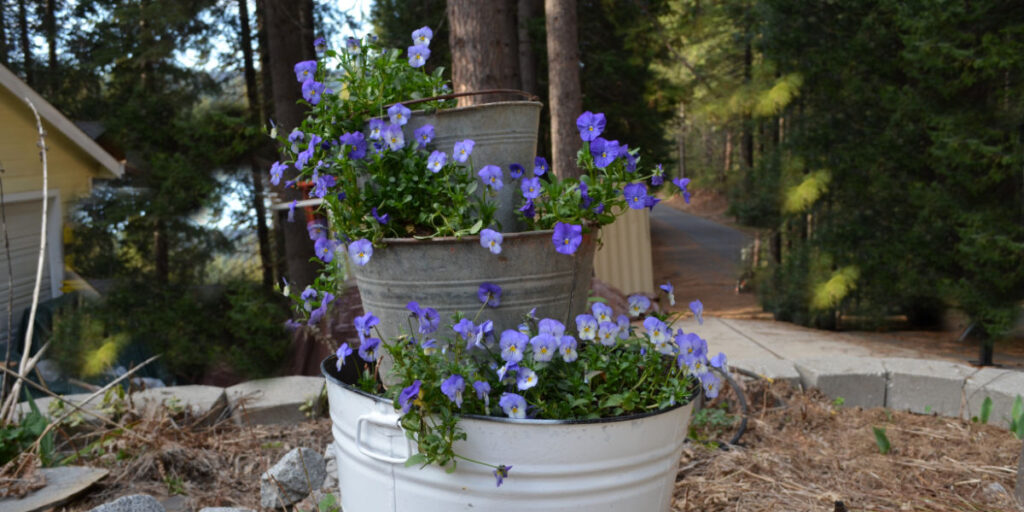
Violas are wonderful for containers!
I especially like them in window boxes and pots where their flowers are closer to eye level.
That also makes it easier to enjoy their delicate fragrance.
They’re beautiful planted on their own, but they also combine nicely with other cool-season plants.
Some companions to consider include heuchera, ornamental grasses, trailing ivy, ornamental kale, and small evergreens.
I particularly enjoy combining purple and yellow violas with foliage plants that bring out their colors.
Just make sure your container has drainage holes and use a quality potting mix.
Keep an eye on moisture because pots can dry out faster than garden beds.
Easy Ways to Use Violas in a Cottage Garden
One of my favorite ways to grow violas is along garden pathways.
Their small flowers are charming at the edge of a path, and when you walk by, you may catch a hint of their sweet fragrance.
I also love planting them in drifts of a single color.
A group of purple, yellow, or lavender violas can make a surprisingly beautiful statement, even though the individual flowers are small.
You can also tuck them beneath taller perennials, around the edges of containers, or into little open spaces in flower beds.
And if they decide to reseed in unexpected places, I usually let them stay.
Those happy little surprises are part of the charm of my garden.
Frequently Asked Questions About Growing Violas
Do violas prefer sun or shade?
Violas generally bloom best with plenty of sunlight in cool weather. In warmer climates, morning sun and afternoon shade can help extend their flowering season.
Can violas survive freezing temperatures?
Many violas tolerate frost and freezing temperatures, especially when established. Their ability to overwinter depends on the variety, drainage, and local winter conditions.
Do violas bloom all winter?
In mild climates, some violas bloom through much of winter. In colder areas, they may stop flowering during the coldest weeks and resume as conditions improve.
Should I deadhead violas?
Deadheading can encourage more flowers, but leave some blooms to develop seeds if you’d like your violas to reseed themselves.
Are violas annuals or perennials?
It depends on the species and variety. Some are perennial, while others are grown as annuals or biennials. Many can also return through self-seeding.
Final Thoughts on Growing Violas
Violas may be small flowers, but they certainly bring a lot of joy to the garden.
I love how they brighten the cooler months, how their sweet fragrance greets me along the pathways, and how they sometimes pop up in places where I never would have thought to plant them.
And there’s something especially wonderful about seeing those cheerful little blooms return after a snowy winter.
If you’ve never grown violas before, I encourage you to give them a try.
Start with a six-pack, tuck them into a container or along a garden path, and see how they do in your own growing conditions.
You may discover that these little flowers become some of your favorites, too.
Happy gardening!
Hi, I’m Pamela
With 45 years of hands-on gardening experience, I love sharing practical tips, proven techniques, and inspiration drawn from my own gardens. My goal is to nurture your confidence, spark your passion, and help make every step of your gardening journey more enjoyable.



I grew them through the winter when I lived in the San Joaquin valley. I loved that they brought so much lovely flowers to my otherwise drab garden.
We can grow violas and pansies fall through early summer when the heat gets them. Would love to try the new pansiolas so I will be on the lookout for them. Pansies and violas brighten up a dreary winter. Love them!
I didn’t realize that there were so many varieties! All are just beautiful; thanks for sharing! I was first introduced to tri-color violas as “johnny jump-ups”.
Your pics of violas are so pretty. Almost like a watercolor. Ahh but you are the artist with a brush so I guess you have a great eye for photos too. 🙂
I would take it in a heart beat! We need it but I do love the mild temps we have been enjoying. Downside is my roses are already budding and if we were to have a cold snap suddenly it would do major damage to them.
Hi Pamela!
Wish I could scoop up some of the white stuff here and plop it right over to ya.
Not the temps tho below 0
Since I cannot control the weather I am enjoying it as much as I can. It has been glorious and I shudder when I hear of the cold and in other parts.
I supposed it would not be hard to guess what I was doing to those steps. 🙂 Actually it was my husbands suggestion and, of course, I did not disagree. I do not envy you pulling up that carpet, ugh. Hard, hard work. I wish I had photos of the before in our house. It had dark, dark blue carpet thru out, even in the bathroom. Hate carpet in a bathroom. I wish you the best with that.
Pamela, I need to tackle stairs and mine have carpet so even more work! Those carpet tacks and holes yuck! I see you have the risers partially painted so I just bet you are going to paint glorious flowers on each one! I am sure it will be gorgeous.
The violas are beautiful. I was just in Sacramento for 10 days (well the countryside outside Sac) and I know y’all are worrying about the drought. We are at home too but gotta say I sure enjoyed the weather.