Growing Cosmos in Pots (What They Really Need to Thrive)
Cosmos are one of those flowers that seem almost too easy to grow—until they’re not. If you’ve ever had tall, floppy plants with few blooms, especially in containers, you’ve seen what happens when their growing conditions aren’t quite right.
The good news? Cosmos actually do very well in pots when you understand what they need—and just as importantly, what they don’t.
Let’s walk through how to successfully grow cosmos in containers, based on how the plant behaves biologically, not just garden lore.
This post contains affiliate links. If you make a purchase after clicking a link I may make a small commission at no cost to you.
Why Cosmos Work Well in Containers
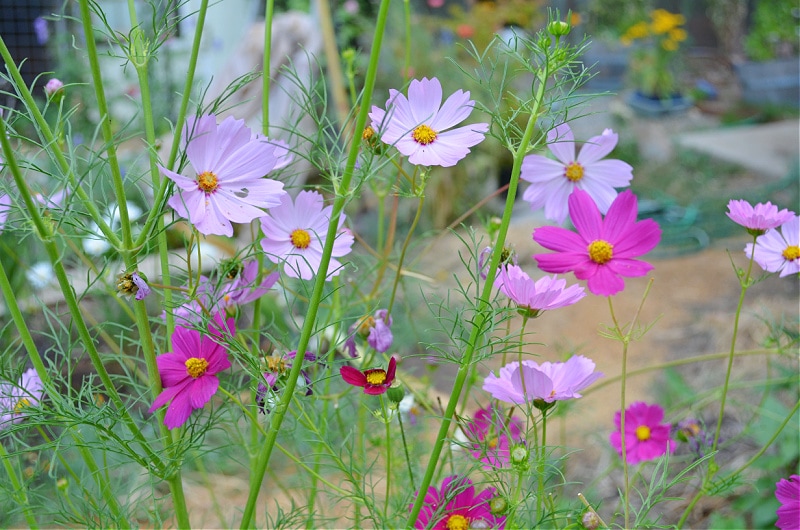
Cosmos (primarily Cosmos bipinnatus and Cosmos sulphureus) are annual plants native to Mexico and Central America. They evolved in:
- Lean, well-drained soils
- Full sun exposure
- Periodic drought conditions
Because of this, they are naturally adapted to:
- Limited root space
- Low fertility environments
- Drying cycles between watering
That makes them surprisingly well-suited to container growing—if you don’t overdo the care.
Renees Garden Seeds carries some wonderful varieties!
1. Choose the Right Container Size
Cosmos develop a branching root system that needs enough space to anchor tall stems.
- Minimum: 10–12 inches deep and wide
- Ideal: 12–16 inches for taller varieties
Smaller pots dry out too quickly, causing stress that leads to poor flowering.
If you’re growing dwarf varieties, you can go slightly smaller—but depth still matters for stability.
2. Use a Well-Draining Soil Mix
Drainage is critical.
Use a high-quality potting mix, not garden soil. Garden soil compacts in containers and restricts oxygen to roots.
Look for mixes that contain:
- Peat or coco coir (moisture balance)
- Perlite or pumice (drainage and aeration)
Roots need oxygen just as much as water. Poor drainage is one of the fastest ways to stunt cosmos.
3. Full Sun Is Non-Negotiable
Cosmos require at least 6–8 hours of direct sunlight daily.
Insufficient light leads to:
- Leggy, stretched growth
- Weak stems
- Fewer blooms
In containers, this matters even more because the plant has fewer reserves to compensate.
If your plants are tall but floppy with sparse flowers, light is often the issue—not fertilizer.
4. Don’t Over-Fertilize
This is where many gardeners go wrong.
Cosmos are adapted to low-nutrient soils. When you add too much fertilizer—especially nitrogen—you get:
- Lots of leafy growth
- Fewer flowers
- Weak, floppy stems
In most cases:
- A good potting mix is enough
- Additional fertilizer is unnecessary
If you do feed, use a low-nitrogen, balanced fertilizer sparingly.
15 Beginner Gardening Mistakes
5. Water Deeply, Then Let Soil Dry Slightly
Container plants dry faster than in-ground plants, but cosmos still prefer a bit of drying between waterings.
Best practice:
- Water thoroughly until it drains out the bottom
- Allow the top inch of soil to dry before watering again
- I prefer using a Moisture Meter, it gives me a better picture of what is happening closer to the root zone.
Constantly wet soil can lead to:
- Root stress
- Reduced oxygen availability
- Poor flowering performance
Cosmos are moderately drought-tolerant once established.
6. Choose the Right Varieties
Not all cosmos are ideal for containers.
Better choices include:
- Dwarf or compact varieties (easier to manage in pots)
- Shorter Cosmos sulphureus types
Taller Cosmos bipinnatus varieties can still work—but they often need:
- Larger pots
- Support or staking
Matching the plant size to the container size helps keep cosmos stable and upright. That said, I have also grown them successfully in smaller pots by partially burying the containers into the garden bed, which helps anchor and stabilize the plants.
This is not a hard and fast rule, just a tip for better success for most people. Test things out for yourself; you might be surprised what works for you.
7. Provide Support for Taller Plants
Cosmos can grow 3–5 feet tall, even in containers.
In a pot, they are more prone to tipping because:
- Roots are confined
- Soil mass is limited
Use:
- Small stakes
- Grow-through supports
- Group plantings for natural support
Wind exposure increases the need for support.
easy to make
DIY Plant Supports
8. Deadheading Improves Bloom Production
Cosmos are programmed to set seed quickly.
When flowers are left to mature:
- The plant shifts energy toward seed production
- Flowering slows down
Regular deadheading:
- Encourages continuous blooming
- Extends the flowering season
This is especially important in containers, where plant energy is more limited.
How to Deadhead
9. Watch for Overcrowding
It’s tempting to fill a pot for a lush look, but overcrowding leads to:
- Poor air circulation
- Increased disease risk
- Competition for water and nutrients
Give each plant enough space to develop its natural branching habit.
10. Containers Heat Up Faster
One key difference in container growing is temperature.
Pots:
- Heat up faster in the sun
- Dry out more quickly
- Can stress roots during extreme heat
In hotter climates:
- Use larger containers (more soil buffers temperature)
- Consider light-colored pots
- Water more consistently during heat waves
Final Thoughts
Cosmos are often described as “easy,” but they really are specific.
They thrive when you:
- Give them full sun
- Use well-draining soil
- Avoid overwatering and overfeeding
In containers, the biggest mistake is trying to treat them like high-maintenance annuals.
In reality, cosmos perform best when you take a lighter hand.
Let them grow a little wild—and they’ll reward you with armfuls of blooms.
Happy Cosmos Container Growing!
Hi, I’m Pamela
With 45 years of hands-on gardening experience, I love sharing practical tips, proven techniques, and inspiration drawn from my own gardens. My goal is to nurture your confidence, spark your passion, and help make every step of your gardening journey more enjoyable.