12 Easy Perennials to Take Cuttings From in May
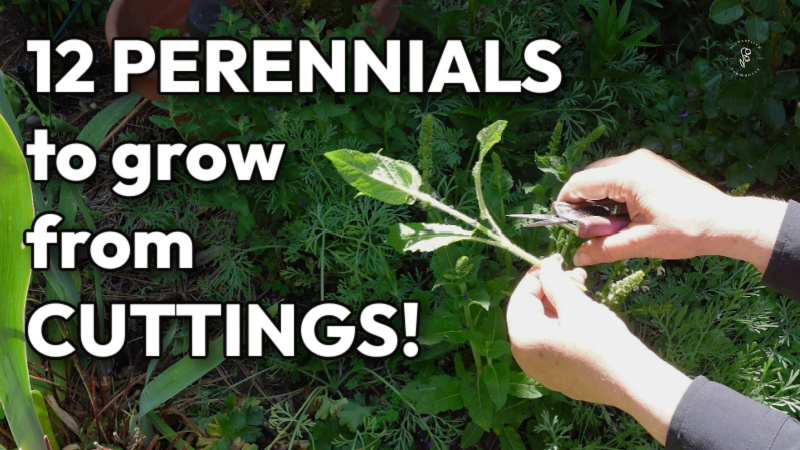
Hey garden friends! Today, we’re going to talk about 12 of my favorite perennials to take cuttings from in May.
A Quick Note About Zones
Before we begin, I want to clarify something important. I’m in USDA hardiness zone 8b, but my growing season is short. Other parts of the country that are also 8b might have very different conditions—warmer springs, longer seasons, and more predictability. For example, 8b in Texas is very different from 8b here.
So, when I take cuttings in May, your timing might be different depending on when your plants come out of dormancy. Always go by your own growing season—not just the calendar.
Don’t Grow by Zones
This post contains affiliate links. If you make a purchase after clicking a link I may make a small commission at no cost to you.
Prepping Your Potting Mix
To propagate, I use a potting mix made from my homemade compost. I sift it to remove large chunks and lighten it up with either perlite or horticultural sand. (you can use a quality potting soil mixed with the sand or perlite)
Sometimes, I even root cuttings directly in sand—especially roses. It’s sterile and drains well.
Use 4-inch recycled nursery pots or smaller ones, depending on what you have on hand. I moisten the mix thoroughly before planting the cuttings, using a pencil or chopstick to make planting holes. (I share how to do this in the video linked near the end of this post)
Tips for Success
- Use clean, sharp scissors or pruners.
- Remove lower leaves.
- Moisten the potting mix first.
- Optional: Use rooting hormone to encourage faster root development.
Rooting Hormone – Yay or Nay?
Though using rooting hormone is optional and you can propagate without it, there is a very good reason why I usually do use it. I will explain why.
Using rooting hormone when propagating plants from cuttings can significantly increase your success rate. This hormone helps stimulate root growth by encouraging the plant cells at the cut site to develop roots more quickly and robustly.
It also gives cuttings a head start in overcoming transplant shock and environmental stress, reducing the chances of failure due to rot or dehydration. Whether you’re working with soft, green stems or slightly woody cuttings, rooting hormone can boost your odds of growing healthy, vigorous new plants—especially when dealing with more stubborn species.
note: this was taken from the transcript of the video I did for my YouTube channel, the step-by-step for each plant is in the video.
The Plants Featured
1. Golden Sage
Tip cuttings work best. Place them along the edge of the pot. The roots tend to form better there, and the plant benefits from a little warmth and airflow.
In the video, I explain the theories of why it is beneficial to place the cuttings around the rim of the pot instead of the center.
2. Clematis
These root inter-nodally, meaning roots form between leaf nodes rather than directly at the node. Cut just above a leaf node and slice the base of the stem lightly before dipping it in rooting hormone.
3. Snapdragons
Especially great for taking tip cuttings. Snapdragons root easily and help you multiply your favorite colors. I start them from seed and then take cuttings from the plants.
4. Golden Elderberry or Black Lace Elderberry
Very pliable in spring. Take cuttings from the soft, pliable stems (I have also taken cuttings and successfully rooted in more mature stems).
Just make sure to get a couple of nodes below the soil line. I don’t always use rooting hormone here, but it doesn’t hurt to add it.
5. Phlox (Garden, not Creeping)
Trim to a leaf node, strip the leaves, and plant it the same way. The more cuttings you take, the better the chances of success.
6. Dahlia
Not traditionally thought of as perennials unless overwintered, but you can easily propagate from stem cuttings. Take a cutting just above a leaf node and remove excess leaves to minimize moisture loss.
Want to take basal cuttings? I have you covered right here.
7. Veronica
Typically, you want to take cuttings from stems that do not have flowers or buds on them, but that isn’t always possible. When the stems have flower buds forming already, remove them to help focus the plant’s energy on root formation. Plant with at least one leaf node below the soil line but two are better.
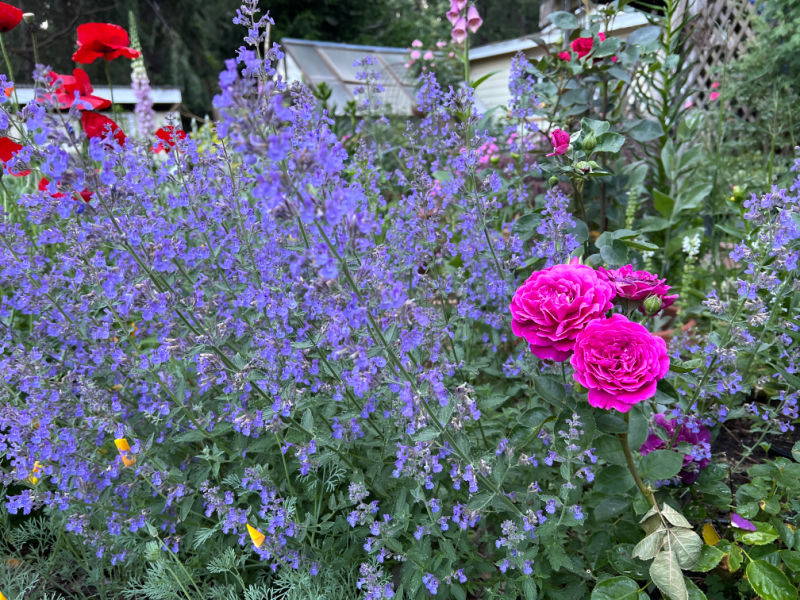
8. Nepeta (Catmint)
Even if it’s starting to bud, you can take healthy, non-flowering stems from lower down. It’s a great plant to bulk up with cuttings.
I often dig up and divide my Nepeta in the Fall to create more plants, as well as take cuttings in the Spring.
9. Shasta Daisy
Select non-hollow stems for best success. If the cutting is tall, you may need a larger humidity dome or a Ziploc bag setup.
I prefer root dividing daisies as well and will do that in early Spring or late Summer and spread around. But they also grow very fast and easy from seed.
Grow Daisies
10. Penstemon
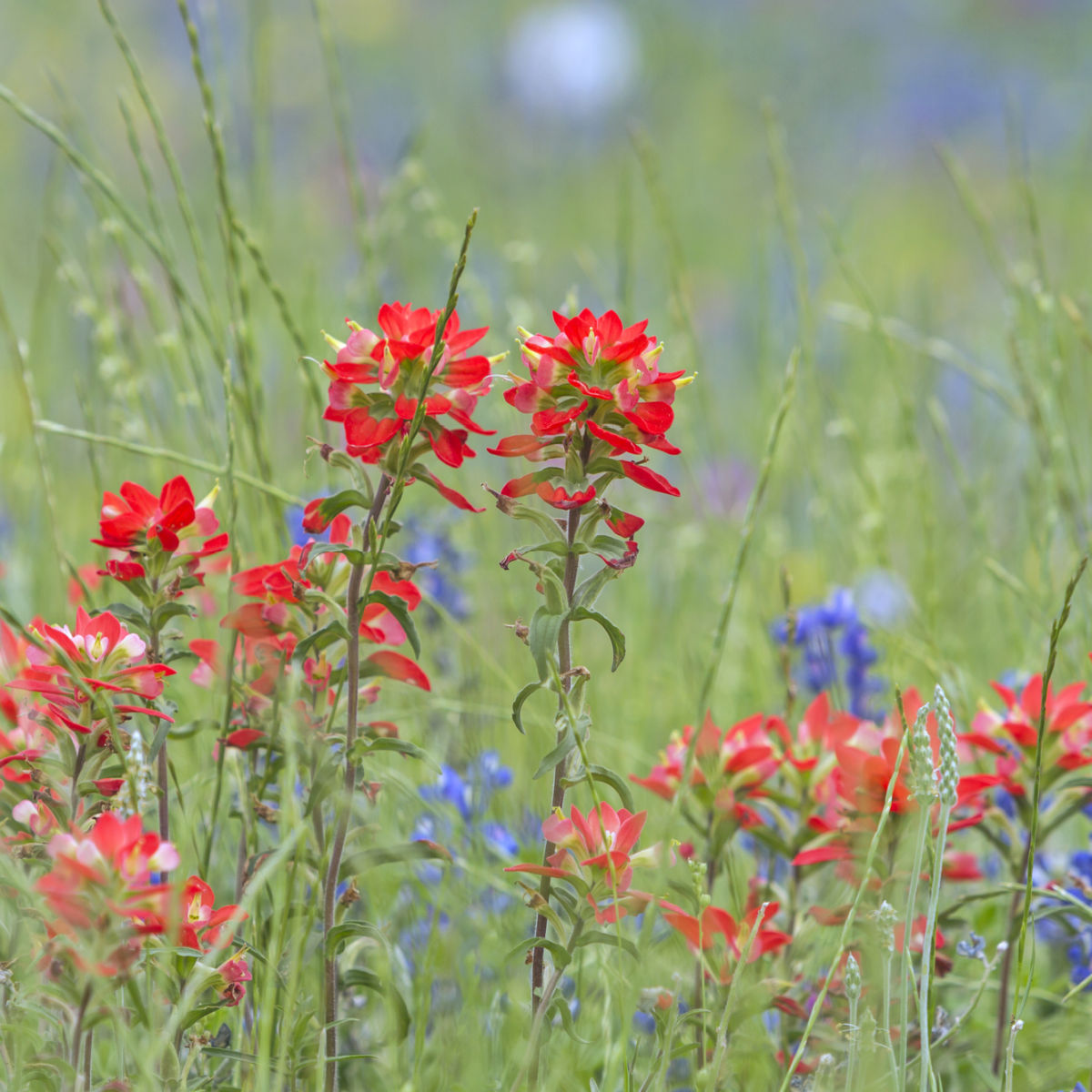
Avoid the woody parts and cut flexible green growth. This blue-flowering native roots well from tip cuttings.
11. Golden Feverfew
Valued for its chartreuse foliage. Look for non-hollow stems, trim side leaves, and use rooting hormone for a better strike rate.
12. Mystic Spires Salvia
One of my favorites! This plant roots well from tip cuttings, especially when the soil has warmed up in late spring.
Humidity Domes & Aftercare
You don’t need fancy equipment. I’ve used recycled plastic tubs, Ziploc bags with chopsticks, or traditional seed-starting domes with vents. The goal is to keep humidity in until the cuttings form roots, since they can’t take up water through roots yet.
When I can keep them in the greenhouse, before the summer heats up, I don’t use a humidity dome. This is so much moisture in the air with all the plants and trays with water that the plants get enough without a cover.
Wrapping Up
Once your cuttings are rooted, you’ll have plenty of new plants to spread around your garden—or share with friends! I hope this inspires you to try propagating perennials in your own space this spring. Let me know what you’re propagating and how it goes!
Happy gardening!
Hi, I’m Pamela
With 45 years of hands-on gardening experience, I love sharing practical tips, proven techniques, and inspiration drawn from my own gardens. My goal is to nurture your confidence, spark your passion, and help make every step of your gardening journey more enjoyable.