Do Bearded Iris Need Fertilizer? (What Science Actually Says)
There was a time when I thought every flower in my garden needed feeding to perform well.
You know the advice—fertilize for bigger blooms, greener leaves, stronger plants.
But over the years, especially as I’ve worked to simplify my garden and rely more on compost and natural soil health, I started to notice something…
My bearded iris didn’t seem to need much at all.
In fact, the more I fussed with them, the less happy they seemed.
So I dug into the research—and what I found might surprise you.
The Short Answer
If you are regularly adding compost and your soil is reasonably healthy…
👉 You likely do NOT need to fertilize your bearded iris.
And in some cases, fertilizing can actually make things worse.
Why Bearded Iris Are Different
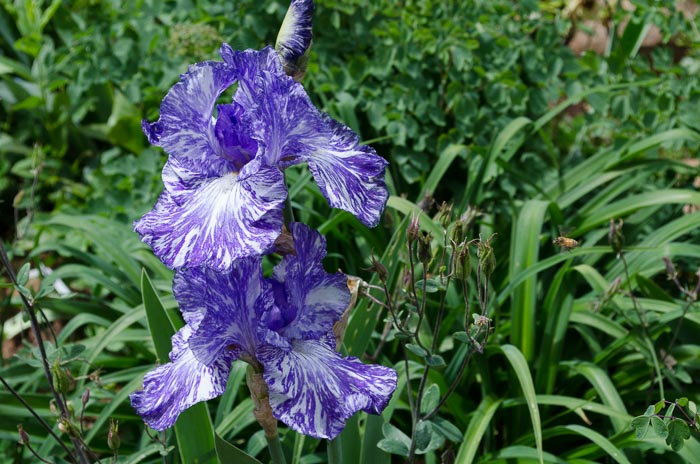
Bearded iris (Iris germanica) aren’t like heavy-feeding annuals or vegetables.
They are adapted to tougher conditions—lean soil, good drainage, and not a lot of extra nutrients.
That thick rhizome sitting at the soil surface?
It’s not just for looks.
They Store Their Own Nutrients
Research shows that iris rhizomes actually store nitrogen and reuse it in future growing seasons.
That means established plants are partly self-sufficient.
They’re not relying on you to constantly feed them.
What Science Says About Fertilizer
Here’s where things get interesting.
Nitrogen Matters (But Not Too Much)
Studies on bearded iris have found:
- Nitrogen can influence growth and flowering
- But too much nitrogen leads to:
- Excess leafy growth
- Fewer blooms
- Increased disease risk
And here’s the kicker…
👉 Phosphorus (the “bloom booster” nutrient) showed little to no effect on flowering.
That goes against a lot of common gardening advice.
Compost vs Fertilizer (This Is the Real Key)
Let’s talk about what you’re already doing.
If you are:
- Adding compost
- Mulching your beds
- Building healthy soil over time
Then you are already providing:
- Slow-release nutrients
- Improved soil structure
- Better moisture balance
👉 And most importantly—a gentle, steady supply of nitrogen
That’s exactly what iris prefer.
Build Your Soil Naturally
When Fertilizer Is NOT Needed
You can skip fertilizer if your iris are:
- Blooming well
- Producing healthy green leaves
- Increasing naturally each year
In this case, adding fertilizer won’t improve performance—and may reduce it.
When Fertilizer Might Help
There are a few situations where feeding could be beneficial:
- Pale or yellowing leaves (possible nitrogen deficiency)
- Weak growth or fewer blooms over time
- Very poor or depleted soil
But even then…
👉 The most reliable method is a soil test, not guesswork.
The Hidden Risk of Overfeeding Iris
This is where many gardeners get into trouble.
Bearded iris prefer lean conditions, and excess nutrients—especially nitrogen—can lead to:
- Soft, lush growth that flops
- Increased susceptibility to rot
- Reduced flowering
If you’ve ever had gorgeous leaves but hardly any blooms…
Too much fertilizer could be the reason.
A Simpler Way to Grow Better Iris
Over time, I’ve learned that iris thrive when we do less, not more.
Here’s a simple, science-based approach:
- Add compost once or twice a year
- Keep soil well-drained
- Avoid burying the rhizomes too deep
- Skip routine fertilizing unless there’s a clear need
That’s it.
No complicated feeding schedules. No expensive products.
Grow Bearded Iris
The Takeaway (And a Little Garden Wisdom)
Bearded iris are one of those plants that reward restraint.
They don’t want rich soil.
They don’t want constant feeding.
They don’t want to be fussed over.
👉 They want balance.
And if you’re already building your soil with compost, you’re giving them exactly what they need.
Sometimes the best thing we can do in the garden…
Is step back and let the plant do what it was designed to do.
FAQ (Quick Answers)
Do bearded iris need fertilizer every year?
No. In healthy soil with compost, annual fertilizing is usually unnecessary.
What is the best fertilizer for iris if needed?
A low-nitrogen fertilizer, applied sparingly and only if deficiencies are present.
Does compost replace fertilizer?
In many cases, yes—especially for plants like iris that prefer lower nutrient levels.
Happy Iris Growing!
Hi, I’m Pamela
With 45 years of hands-on gardening experience, I love sharing practical tips, proven techniques, and inspiration drawn from my own gardens. My goal is to nurture your confidence, spark your passion, and help make every step of your gardening journey more enjoyable.



No, I am sorry, I have not. But I do have one that I love, I should research it and give it a try. Thank you for the idea!
I am so happy you found this helpful. Congratulations on getting blooms!
*waving from the coast of California* Just wanted to thank you for all of your videos and experience/information on gardening. Love your garden! Wanted to especially thank you for your info on irises. I planted mine in dense clay years ago, not realizing how much water they needed. They sat there with green leaves looking just fine in drought years and normal years, but not blooming. The gophers left them alone, they were not in well-drained soil, but they hung in there. I lost interest in them, then saw yours and read your info on them. I mulched them thickly and watered them more and, wow, they just bloomed like crazy! Then I found out about all of the beautiful types available now. I so appreciate them much more than I ever did. Thanks!
Have you ever propagated rhododendrons?